How a humanist network of free-thinking intellectuals transformed Britain in the 20th century
Ninety Humanists and the Ethical Transition of Britain (Bloomsbury Academic) by Callum G. Brown
Historian Callum G. Brown has spent his career charting secularisation and social change. In Ninety Humanists and the Ethical Transition of Britain he zooms in on a particularly tumultuous period, 1930-80, which saw major law reforms and the accelerated decline of Christianity’s dominance over British society.
In doing so, Brown reassesses the origins of the progressive 1960s, turning traditional accounts that attribute the rapid changes in British society to youth revolt, the sexual revolution and feminism on their head. He describes instead how a humanist-dominated network of free-thinking intellectuals, inspired by the vision of H. G. Wells for an “open conspiracy” towards world revolution, ushered in dramatic legal and social liberalisation across just a few short decades, by methods which sidestepped party politics and posited ethics as a unifying force. The book aims to show “how religious control was broken by a group of ninety-four humanists, atheists and a few friends – by a benevolent conspiracy to overthrow moral theocracy.”
What emerges is a meticulously constructed constellation of humanist scientists, writers, campaigners and politicians who worked in an informal but deeply interconnected network to transform the ethical attitudes and laws of the UK. Wells first wrote of his idea for an “open conspiracy” in the 1920s, when society was reeling from the First World War, proposing a world community rooted in science and shared humanity. Brown pinpoints a trio of motivators – humanitarianism, autonomy and internationalism – underpinning Wells’s vision, which animated the work of his Federation of Progressive Societies and Individuals (FPSI), and was continued after Wells’s death in 1946 by “ad hoc micro-networks” of ethical campaigners.
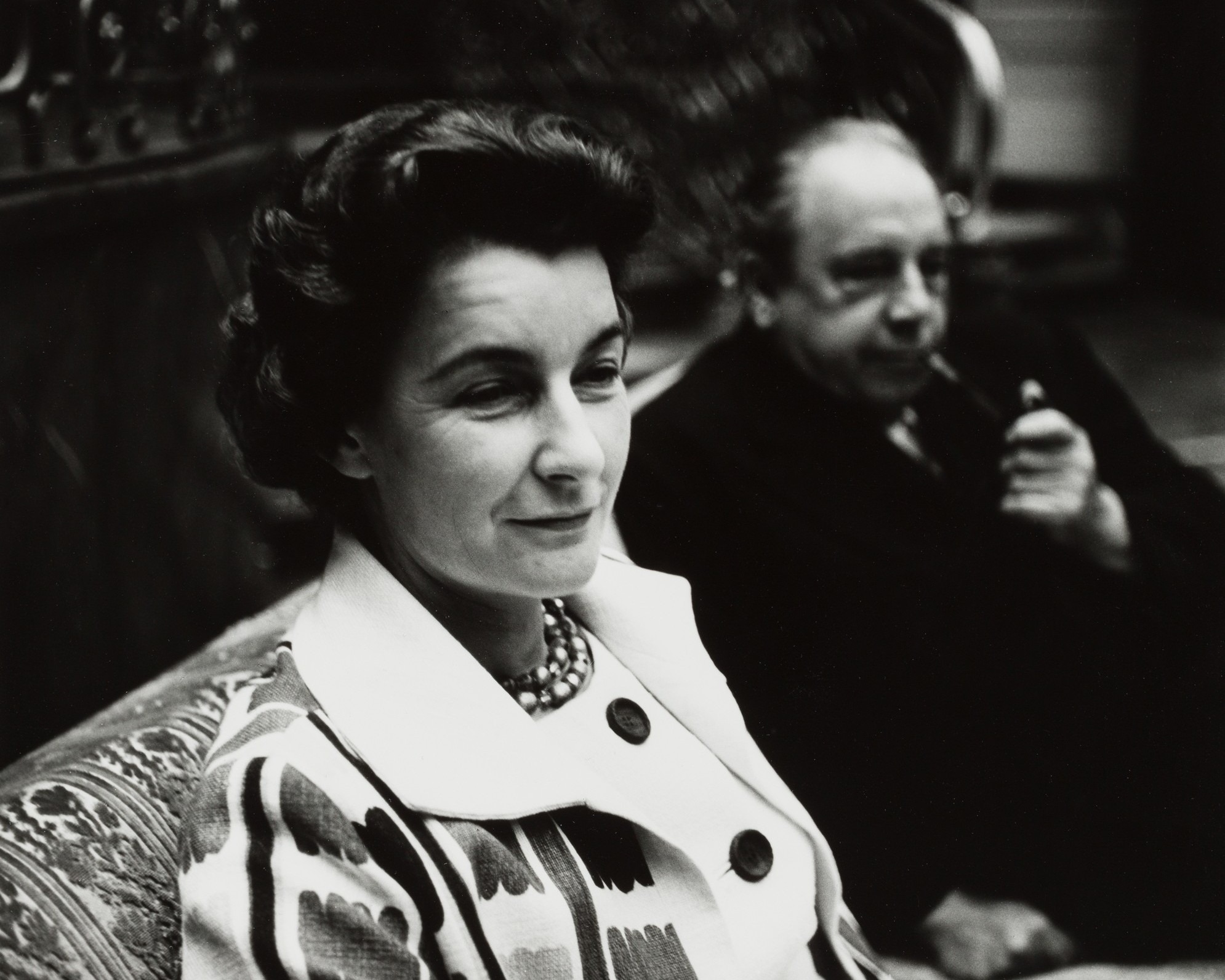
Among the cast of characters are familiar names, like Bertrand Russell, Barbara Wootton and Julian Huxley, whose wide-ranging efforts are explored in depth. But Brown also does much to salvage less remembered stalwarts of reform, like Labour politician Kenneth Robinson, divorce law campaigner May Seaton-Tiedeman and archaeologist Jacquetta Hawkes, who, alongside her playwright husband J. B. Priestley, devotedly campaigned and hosted co-conspirators for dinner and drinks.
Brown maps this network’s influence on public opinion and legal reform across a staggering spread of issues, spanning marriage and divorce, sexual and reproductive freedoms, prison and penal reform, pacifism and disarmament, obscenity and censorship, racial justice, decolonisation, mental health, and corporal and capital punishment. In a vital corrective to ideas of charity and humanitarianism stemming largely or solely from Christianity or Christian leaders, he demonstrates the pivotal role of humanists in forming, organising and supporting organisations from the National Council for Civil Liberties to the Campaign for Nuclear Disarmament. While never denying religious figures their due, he convincingly argues that the engine of ethical change was humanist.
While many key law reforms were won by lobbying, campaigning and private members’ bills, public sentiment was influenced in other ways too. Take humanist and psychiatrist Eustace Chesser, whose 1940 Love Without Fear: a Plain Guide to Sex Technique for Every Married Adult led to his prosecution for obscenity (he was found not guilty), but who in a less public way acted as an adviser to agony aunt Marjorie Proops, helping to shape a franker, better informed approach to advice on marriage and relationships. Brown also highlights the remarkable prominence of network members in public ethical debate, like the televised exchange on assisted dying in 1967 in which two humanists – legal scholar Glanville Williams (pro) and lawyer and politician Leo Abse (against) – were moderated by a third, Ludovic Kennedy.
Published by Bloomsbury Academic, this is fundamentally an academic work, but still eminently readable for anyone with an interest in the transformations of the 20th century. Brown’s often wry style and brilliantly selected quotes make it a genuinely enjoyable read. He describes the “aging aspic” in which British sexual culture had been held, and the “withering tango” between humanists and the secret services who persistently surveilled them. We’re treated to lines like C. E. M. Joad’s suggestion that “each cock likes to crow on the dung hill of his own eccentricity”, and Wells’s suggestion that fellow philosopher and science-fiction writer Olaf Stapledon come to lunch so that they might “settle the whole Damn Silly Universe”. There is humour and friendship and dinner parties and art, as well as serious campaigning. Who says we can’t have it all?
This article is from New Humanist’s Spring 2026 edition. Subscribe now.