Tackling themes of climate change and Hindu nationalism, this ambitious novel heralds a bold new talent
Saraswati (Serpent’s Tail) by Gurnaik Johal
Hindutva, or Hindu nationalism, is often criticised for using religious identity and nationalist sentiment to assert the cultural supremacy of the Hindu majority in India, undermining the secular foundations of the republic. While secularism promotes cultural diversity and a society grounded in rationality, Hindutva treats mythology and pseudo-science as historical fact.
Prime Minister Narendra Modi, a right-wing Hindu nationalist, frequently glorifies India’s distant past, blurring the boundaries between myth and history. In a 2014 speech during his first term, Modi claimed that ancient India had mastered plastic surgery and genetic science, drawing on mythic narratives as evidence. He has also endorsed efforts to trace the lost Saraswati River, considered to be sacred in Hindu texts, suggesting that its rediscovery would reaffirm India’s ancient greatness.
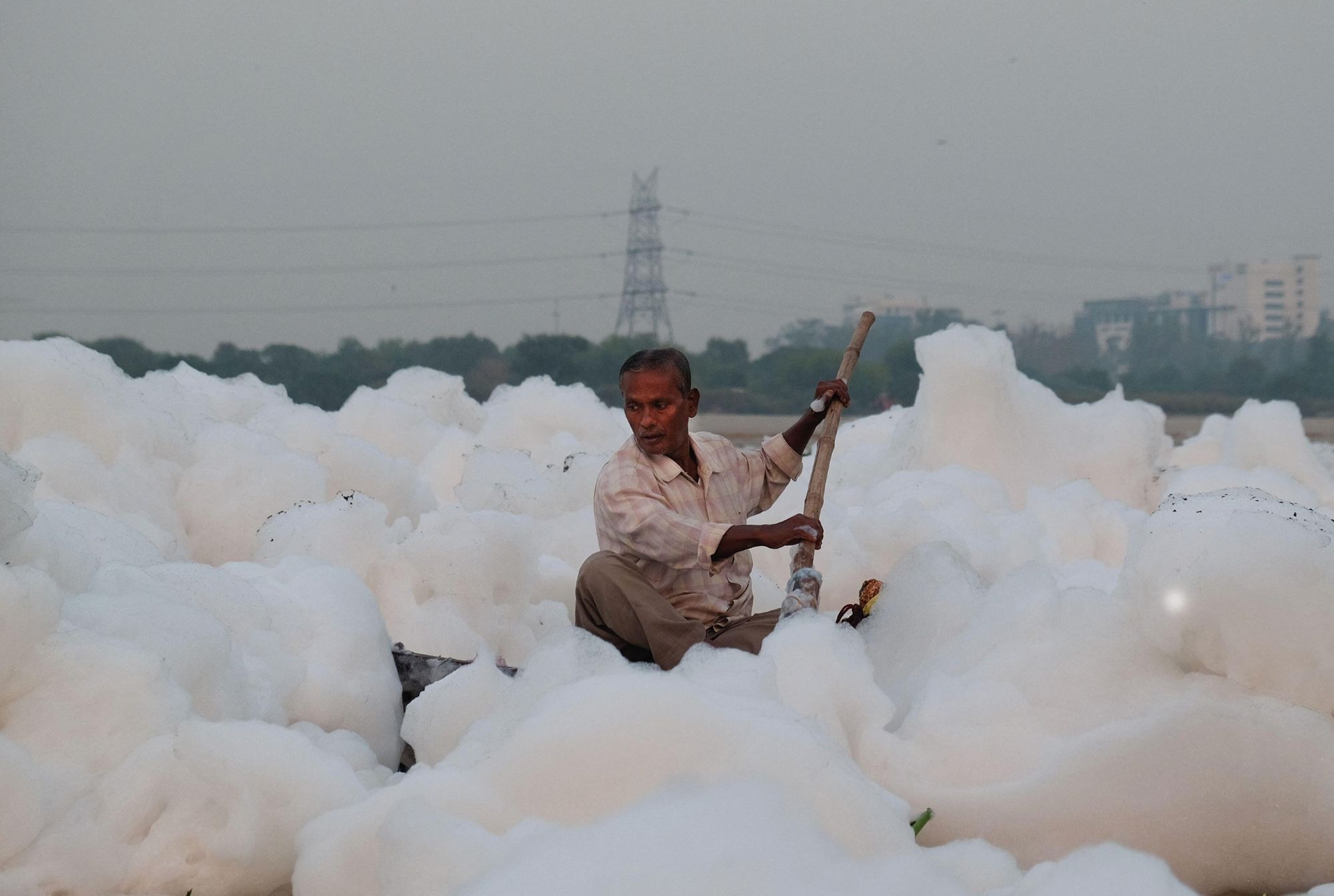
Shortlisted for the Waterstones Debut Fiction Prize, Gurnaik Johal’s sprawling and timely novel Saraswati uses the fictional resurfacing of this mythical river to explore themes of climate change, environmental degradation and Hindu nationalism. Johal has said he was inspired by images of toxic foam – a mixture of sewage and industrial waste – floating on the Yamuna River, a tributary of the Ganges. Hindu devotees bathed in the polluted water, choosing worship over protest. This contradiction – faith in mythology over a rational response to ecological catastrophe – is the emotional heart of the novel.
Spanning continents and generations, we follow seven interconnected characters – all descendants of a 19th-century intercaste couple, Sejal and Jugard, who elope to Punjab in 1878. Buffeted by war, empire and the need to survive, their seven children, all named after rivers, end up scattered across the world in different diasporas.
The novel opens with Satnam travelling from London to Hakara, Punjab, to visit the farm he has inherited from his late grandmother. Rather than selling the land, he chooses to stay, intrigued by the mysterious return of water to the farm’s long-dry well. He becomes entangled with a group of Hindu nationalists who exploit the alleged reappearance of the lost river and participate in a contentious and violent development scheme. The phenomenon, in reality, is the result of Himalayan glacier melt. In a chillingly prescient twist, Johal’s fictional prime minister, Narayan Indra, uses the river’s resurfacing to escalate hostilities with Pakistan, breaching the Indus Waters Treaty – foreshadowing Modi’s own suspension of the treaty in April 2025.
The novel’s richly drawn cast includes Katrina, a Mauritian pest exterminator specialising in yellow crazy ants; Natha, a Kenyan archaeologist; Gyan, a Canadian musician and eco-activist; Harsimran, a Bollywood stuntman; Mussafir, an orphaned Pakistani teenager; and a nameless female journalist. Each character is connected to the Saraswati River in different ways.
Saraswati is something of a departure from Johal’s acclaimed short story collection We Move, set amid the immigrant communities of west London. This new work is a layered and, at times, challenging read. Interwoven throughout the main narrative are retellings of qisse – dramatic Punjabi folktales, depicting tragic romance – shared by Sejal and Jugard with their children. Johal experiments with various other registers – interweaving political violence, a car chase, biological warfare (a subplot involving the attempted reintroduction of rinderpest into India’s cattle population) and a tender love story. Humour is threaded throughout, most effectively in the stuntman Harsimran’s chapter, which describes his relationship with a narcissistic Bollywood actor.
Saraswati is an epic, if flawed, tale – overloaded with themes that might have benefited from tighter editing. Yet Johal’s political ambition and narrative flair are undeniable. His debut offers a compelling meditation on the havoc wrought by populism and the rise of nationalism. A memorable novel that heralds a bold new talent.
This article is from New Humanist’s Spring 2026 edition. Subscribe now.