In New York, I found a sweltering city pushing back against Trump and his brutish ICE agents
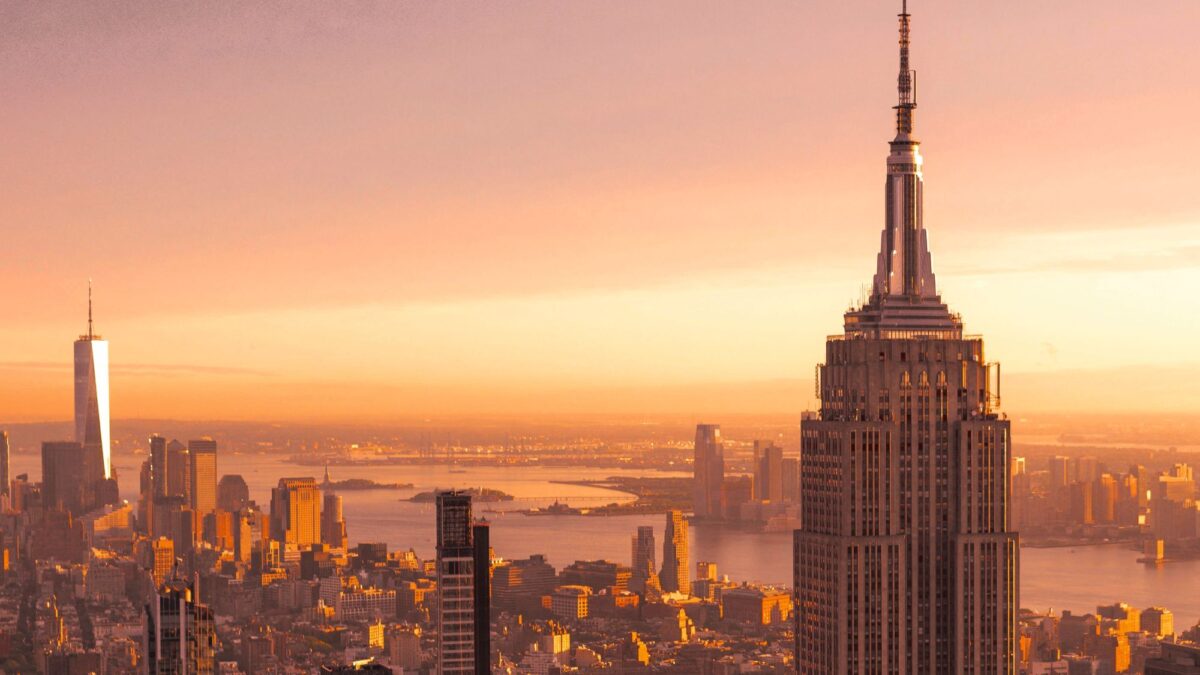
The lower end of Manhattan island is a skyline almost everyone in the world would recognise. Towering over the Statue of Liberty across the bay, the skyscrapers gazing out toward the open Atlantic – it’s a scene synonymous with both New York and America, reproduced a thousand times on T-shirts and baseball caps in the souvenir shops of Broadway and Chinatown.
This part of Manhattan was built around a series of drainage channels, dug by the city fathers to drain the swamps of Manahatta, the original Lenape indigenous name for the island that now houses the modern city of New York. Today, its vendors sell knock-off World Cup shirts, fruit and designer sunglasses for $10 apiece. It is cheerfully chaotic and a long way from the suits and artisan coffees of Wall Street and the Lower East Side.
When Donald Trump was elected to the presidency for the first time in 2016 he promised he would drain the swamp in Washington DC and rebuild it in his own image. In his second term he has returned to an old playbook of targeting two groups in particular: a perceived liberal elite in cities like New York, Boston and San Francisco on the one hand, and migrants from central America, Africa, Asia and the Middle East on the other.
On Canal Street, vendors scatter with practised efficiency as five New York Police Department cars pull up and make for the counterfeit sunglasses. A few of the traders are wrestled to the ground and pushed into vans, whilst others watch warily from a distance or scatter into the subway. The teenage girls browsing fake Gucci bags have them taken out of their hands by officers and are asked to move quietly on.
Across the street, watching it all, is Majid Mitra – a naturalised US citizen originally from Bangladesh – who coaxes tourists into his shop to buy either Donald Trump or Zohran Mamdani T-shirts, depending on their political leanings. In the city that made Trump, Mamdani has become the popular face of resistance to the presidency, both here in America and around the world. While the country is increasingly associated with populist nationalism, since November 2025 it also has a new hero in the young and outspoken mayor, who has been quick to reassert New York’s identity as a city of migrants and cultural diversity.
New York’s melting pot
The Big Apple has long been a gateway to the nation. Ellis Island, once an immigration station, is visible from the waterfront and looms large in the city’s mythology. A huge factor in Mamdani’s surprise victory was his ability to unify communities around a common identity as New Yorkers above all else.
Mitra’s is a common American story. He came to the US to find work and gained permanent status before becoming a citizen, a well-trodden path from visa to Green Card and finally a passport that in theory allows anyone to become American.
Since the second Trump presidency began, however, the reality is somewhat different. Even those who have legally lived in the US for decades are now in the firing line. I ask Mitra about Mamdani, who is the son of Indian Muslims by way of Uganda and one of the most powerful Muslim politicians in the country. He’s positive, but wary about the future. “I think he’s okay right now,” he says. “He tries his best to protect all kinds of communities.”
When I ask Mitra about the NYPD raid we just witnessed, he shrugs. “Maybe those are counterfeit merchandise and they got no licence.” Mitra has run his shop for the better part of 30 years, on a strip of Bangladeshi businesses that sell everything from luggage to vests.
NYPD raids on vendors are nothing new, but since Trump re-assumed office in 2025, the danger has escalated. Something as simple as being picked up for begging on the subway or selling fruit on a street corner could be used as a pretext for detention.
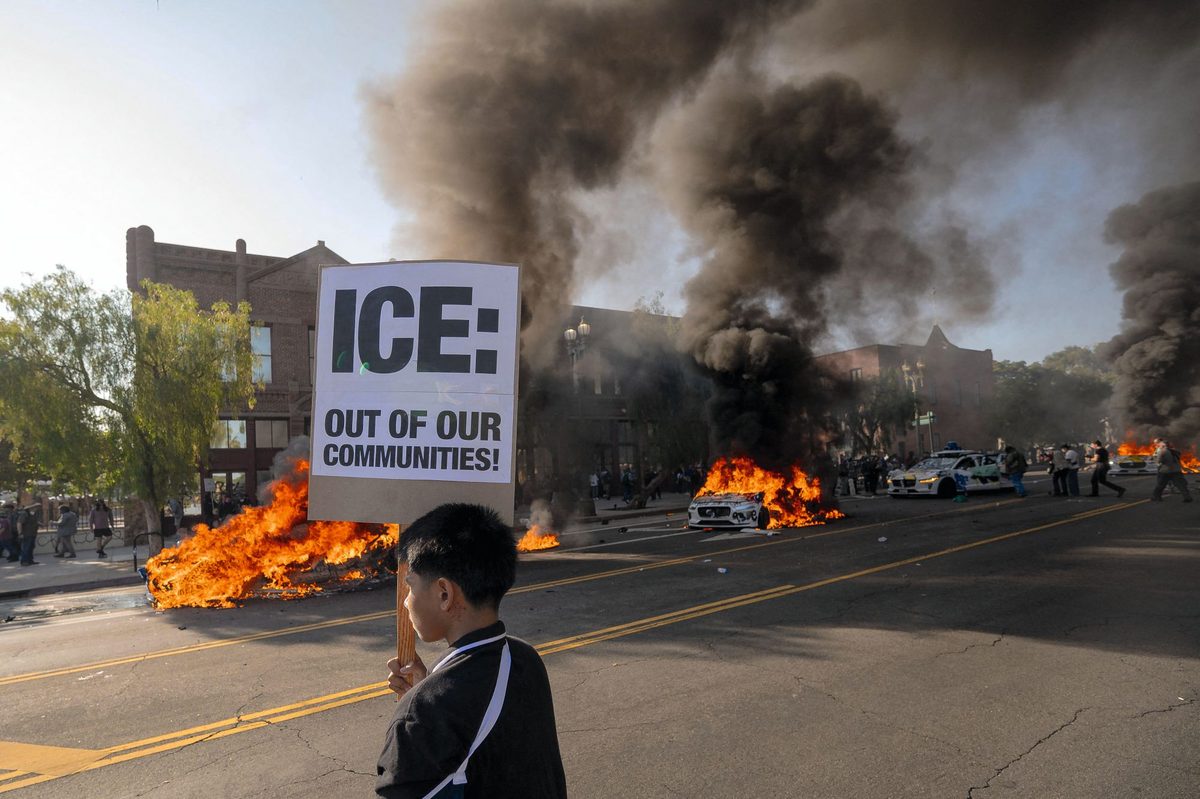
Before Mamdani was elected, the corner where we are standing – at the intersection of Canal Street and Broadway – was the scene of a pitched battle between protestors, the NYPD and the now infamous Immigration and Customs Enforcement agency (ICE). Canal Street was chosen for a showpiece dragnet operation against vendors that resulted in multiple arrests and deportations on the grounds of robbery, counterfeit merchandise, drug trafficking and forgery. Instead of targeting individuals, ICE arrested people en masse. They had done the same in other areas of New York, including the Bronx, where Dominicans and other Hispanic migrants are heavily represented.
Mamdani vs Trump
There is a limit to what Mamdani can do in his “sanctuary city”. ICE is still conducting raids, because immigration is a federal matter in the US, and the agencies that enforce it are also federally funded and directed. But his victory in the mayoral race has made it harder for them to operate. In February, Mamdani banned ICE from entering schools, libraries and other buildings owned by the City of New York. The State of New York has also passed
legislation forbidding police from assisting ICE and preventing information sharing with the agency. Mamdani can’t make any changes to the immigration status of the people who live in New York, but he has stopped the federal government from co-opting the NYPD and the state courts to aid its crackdown on migrants.
This approach has put New York in direct confrontation with Washington, with Trump often referring to the city as if it were a foreign enemy. The administration was already treating neighbourhoods with high migrant populations in much the same way as it plans incursions overseas. ICE agents plan their raids ahead of time, occupying streets in shows of force where the number of agents can outnumber the nominal targets five or six to one. Most controversial has been the arbitrary arrest of people in the target areas, who are then triaged to see if there is any reason to detain them further.
Those detained by ICE in New York often end up at Delaney Hall – a privately run detention facility over the Hudson River in New Jersey, sandwiched between the docks and Newark Liberty International Airport. ICE detainees can spend anything from 24 hours to months in Delaney Hall as their cases are processed. Human Rights Watch has shown how detainees have been coerced into signing “voluntary departure agreements” even if they are in the US legally, forfeiting their legal rights.
There are regular protests outside the facility, highlighting the use of unreasonable force, alleged pepper spray attacks, a lack of ventilation and spoiled food, and allegations of sexual abuse of female migrants. Mamdani has called for Delaney Hall to be closed, saying that the conditions “offend the conscience of so many, not just in New York City but across the country.” But it’s a facility outside of the city and state of New York and there is limited action he can take.
A giant mousetrap
ICE is also still able to operate freely in federal buildings. Just north of Wall Street is Federal Plaza, a cluster of government buildings that functions as the operational headquarters of ICE in New York and the field offices for the Department of Homeland Security’s removal
operations. It is also the site of special courthouses for immigration hearings. Migrants face a Catch-22 situation where they have to attend the court to stay in the US, but know that ICE could well be waiting for them when they get there. ICE agents have entered the building and detained people who are seeking asylum or leave to remain, sometimes with their whole families. Federal Plaza has been turned into a giant mousetrap, leaving migrants with the choice of risking arrest or going underground and becoming illegal by default.
Outside on the pavement a group of protesters stands in silence holding signs. One reads “Remember Nuremburg”, another “Is this what you signed up for?”, waved at ICE agents entering and leaving the buildings. In the crowd are two priests in full Catholic vestments, a reminder that Trumpist attempts to annex the church have not been entirely successful. A black-windowed SUV drives past and the driver leans out.
“More ICE, go Trump!” he shouts at the protestors, who do not dignify him with a reply.
“We come here every Thursday, noon to one,” says Jamie Bauer as they walk the boundary of the protest site. A member of Rise and Resist, a New York civil disobedience group, Jamie will do a silent vigil once the courts close and the federal workers take their lunch. “It’s to support the federal workers who oppose what’s going on, and to confront, silently, the people who are complicit.”
Bauer cut their teeth in ACT Up, the radical AIDS queer and health justice campaign that emerged in 1980s New York. The group attempted to occupy Trump Tower to highlight the indifference of New York’s millionaire class to healthcare and the HIV crisis. It was the first of many run-ins with the current president and his financial empire. “It may start with immigration, but it seeps into other things,” Jamie says. As well as migrants, the Trump regime has also set its sights on everyone from climate change activists to transgender youth and public museums in the quest to remake America.
ICE has become a byword for the brutality of the Trump administration, but it is not a new body. It’s part of the Department of Homeland Security set up under president Bush after the September 11 attacks, with the broad aim to track and pursue anybody deemed a threat to the United States. Under Trump, however, it has ballooned. ICE detainees are not kept in prisons or police custody but in an entirely separate series of detention facilities with capacity for around 100,000 people at a time nationwide.
The mass sweeps, intimidation and abuses in detention are a feature rather than a by-product of the system, as Bauer explains to me. “They break people’s doors down while the family is sleeping. Parents get picked up while all their kids are in school. The trauma inflicted on families is just horrible,” they say. “If they pick someone up who they have a warrant for, anybody else in the surrounding area, they’ll pick up too, whether or not they have any basis. Collateral damage, they call it.”
New York fights back
But the resistance is building. Uptown from Federal Plaza, people dart in and out of Penn Station – the huge transit hub hidden under Madison Square Garden. When I visit, the station is full of World Cup supporters. In an office half a block from the station sits the New York Immigration Coalition, an umbrella advocacy organisation that represents around 200 groups across the state.
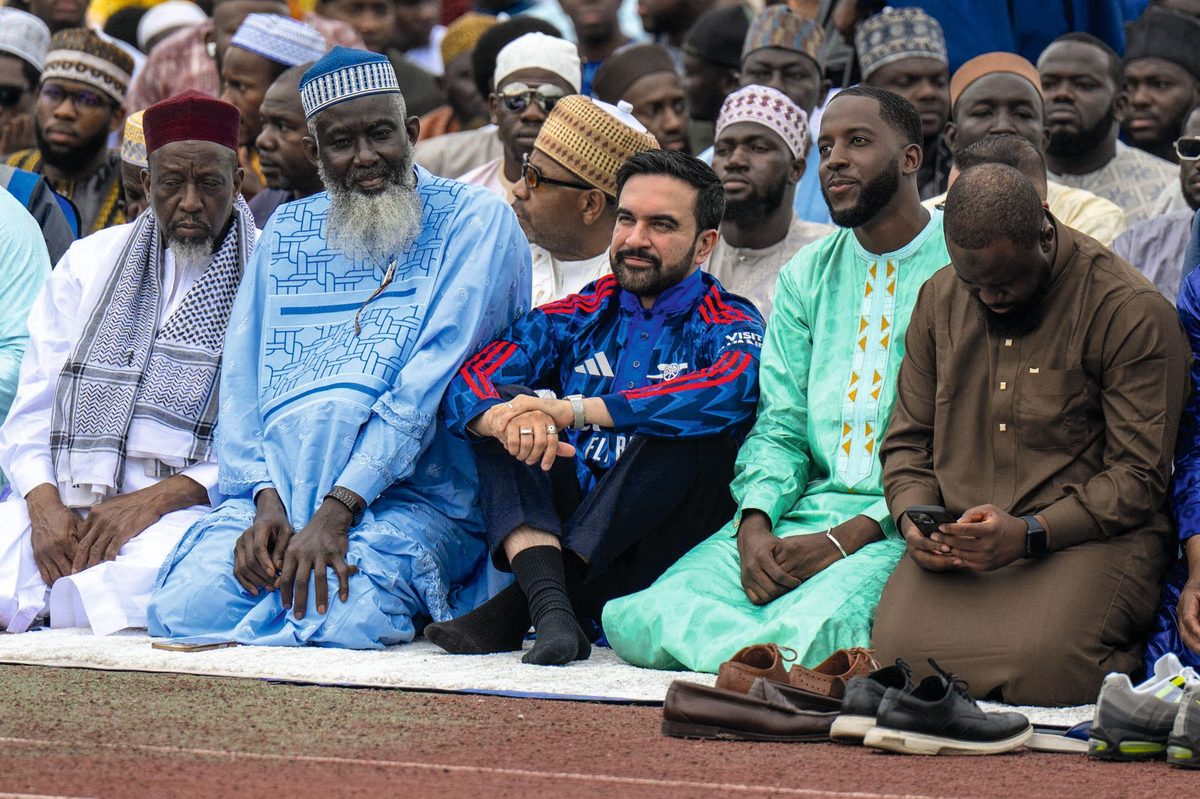
Some of the staff wear Mexico football tops, which in New York far outnumber the white jerseys of the US team. Football is still regarded by the American mainstream as a slightly esoteric import, or a sport for Latinos, but the World Cup has also created a feelgood atmosphere for diaspora communities. Haitians, North Africans and Latin Americans are all visible on the streets of major cities. The White House has been confronted with a very different America to the one it wants.
“When the Trump administration came into office, it chose to make its presence known through very public action,” says Mario Bruzzone, vice president of policy for the coalition and himself the descendant of migrants from Genoa. “From my perspective, that was a deliberate tactic to instil fear,” he adds. “As advocates, we were put in this difficult position: we want to inform people of what’s happening, of where the risk factors are, but we’re also potentially amplifying the terror mechanism the federal government is promoting.” In the 18 months since the administration returned to power, over a million people have had temporary legal statuses revoked. “People’s rights have been killed,” Bruzzone says matter-of-factly.
The immigration coalition is part of a network of organisations, from ground level protesters to lawmakers, finding ways to disrupt, diminish and ultimately undermine the Trump agenda. Mamdani’s victory has made the work of immigrant defence organisations easier, but it’s still an uphill battle. “A sanctuary policy at the governmental level is simply the refusal to use city or state resources to assist with federal enforcement,” Bruzzone explains. New York has gone further than most cities, although Democrat-led administrations in California, Delaware, Maine and elsewhere have placed limits on ICE activity and are the subject of lawsuits by the Department of Homeland Security.
In New York, state law now prevents court officers from informing ICE when a person with an outstanding immigration warrant appears in court. The city also funds legal services specifically designed to represent people in deportation proceedings – though Bruzzone is candid about the limits of this. “We functionally don’t have enough immigration lawyers to serve everyone who needs one. If you think about all of those million people nationwide, there’s just not enough lawyers.”
The goal? Delay and disrupt
My trip to New York made me think about resisting anti-migrant policy in the UK, which will be particularly crucial should Nigel Farage end up either as prime minister or supporting a weak Conservative government. The UK already has its own sanctuary city movement, with major regional centres like Glasgow, Exeter and Norwich pledging to provide a welcoming environment for refugees. But the UK is not a federal system, and city mayors have very limited powers. Although the first ministers of the devolved nations can stress their opposition, all immigration, asylum and nationality laws are managed by the Home Office. The Scottish government has called on the UK government to end unannounced dawn raids, but Westminster does not have to listen, and any party with a majority can legislate away roadblocks set up to thwart them.
Civic resistance, as famously happened in Glasgow during the attempted removal of two Indian men in a dawn raid in 2021, seems far more likely as a route of pushback. Then, hundreds of people blocked a Glasgow street to prevent the removal of Sumit Sehdev and Lakhvir Singh, who had been denied leave to remain in the UK despite living in Glasgow for 10 years. The sit-in resulted in the release of the two men and widespread condemnation of Home Office tactics, galvanising opposition to the “hostile environment” of the then Conservative government.
“What we saw in Scotland was a case of mass civil disobedience, which was effective but still at odds with the law,” says Dr Andrew Tickell, a UK constitutional expert at Glasgow’s Caledonian University who witnessed the protests. “There would be no legislative basis to give directions to the police as in the American system. If a Reform government passed legislation enabling ICE-style teams to roam the UK the police would still be required to enforce that law.”
The American experience demonstrates that even if the White House has the upper hand there is still room for delay and disruption. The bigger hope is not of some final victory, but of undermining Trump to stop things escalating. All eyes are now on November’s mid-term congressional elections to see what can be done to swing Congress against Trump and the Republicans. After that, there’s another two years of Trump’s White House, and then an uncertain presidential election, whose results will likely be contested. “There’s a real appetite right now from the folks I talked to for Democrats who will fight,” says Bruzzone.
On Canal Street, the vendors are back and the growing World Cup crowds mill about before getting buses over the Hudson to watch games at the stadium in the New Jersey wetlands. From the freeway the wire fences and closed windows of Delaney Hall are visible a few blocks away, and in the rear-view mirror the last glimpse of the Manhattan skyline the majority of its inmates ever see. Far from being a single battle between a president and a mayor, New York is the site of a war of attrition over what it means to be American.