Feminism and anti-racism must go hand in hand
This article by writer and campaigner Rahila Gupta is part of our Voices series on how to fight hate, from the Autumn 2026 issue of New Humanist. To read the rest of the series, subscribe now.
There are fires blazing everywhere, both real and metaphorical, with the resurgence of a newly emboldened far right. The bogeyman is overwhelmingly the “Muslim” who merges seamlessly into the migrant and those who are othered by virtue of their skin colour or dress in the popular imagination.
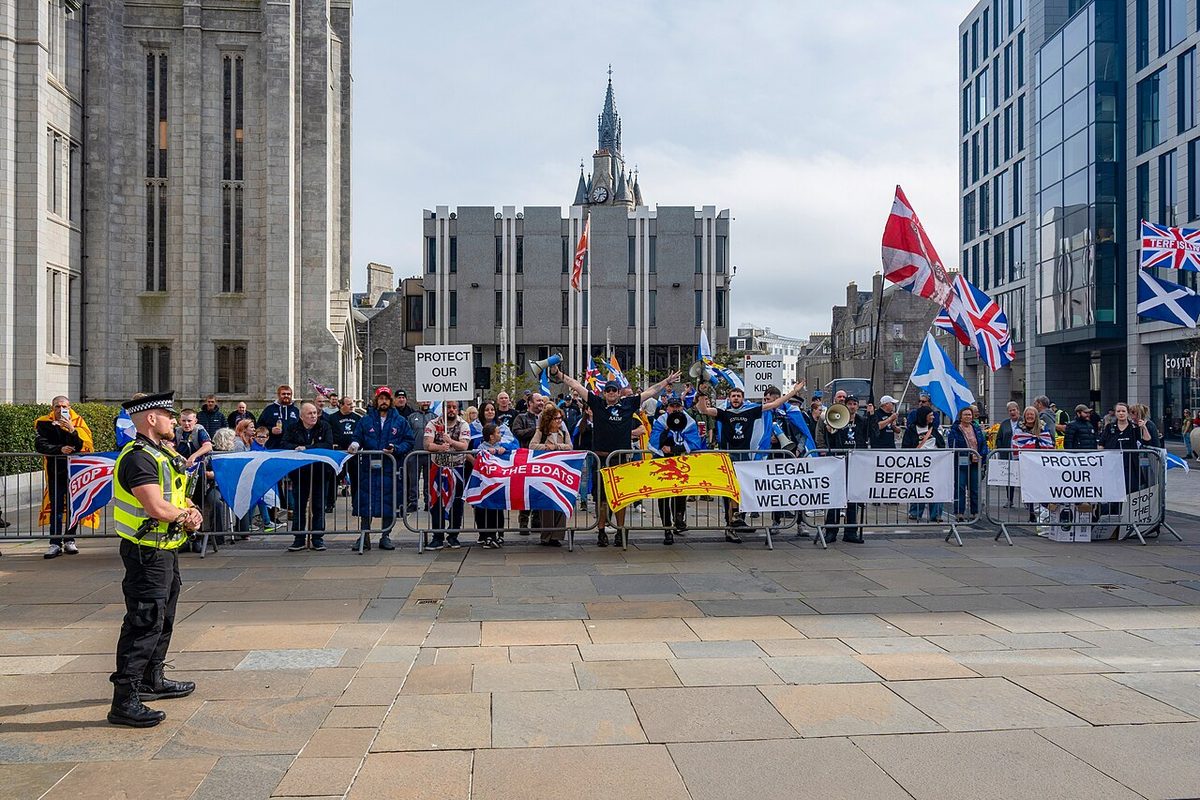
While the most recent conflagrations of racist violence in Belfast and Southampton were sparked by assaults on white men, many of these battles have been fought over the bodies of women and girls. Banners like “Save our Girls” and “Protect our Kids” jostle with “Stop the Boats” placards at far-right protests, unironically suggesting that the threat to girls comes from overseas. Yet of the hundreds of mostly men arrested in the riots that took place in the summer of 2024 across several British cities, in response to the killing of three young girls by Axel Rudakubana in Southport, data suggests that 40 per cent had previously been reported to the police for domestic violence.
During riots outside the Bell Hotel in Epping, in response to news that an Ethiopian asylum seeker, Hadush Kebatu, was arrested for the sexual assault of a 14-year-old girl, a group of women appeared. Calling themselves the Pink Ladies, they waved pink Union Jacks and called out anti-migrant slogans “to protect our kids”.
And yet Louise Raw, researcher into the far right and founder of Survivors against Fascism, has produced a list of 103 far-right individuals, including participants in far-right riots, who have been convicted of sexual crimes, mostly against children.
How do we confront the challenge posed by these developments? There have been calls to curb hate narratives on social media, teach critical thinking in schools, improve policing, invest in deprived areas, improve access to healthcare, employment and housing, and ensure strong condemnation from political leaders. In fact, both the mainstream media and government have been culpable, blaming immigration for the pogroms, rather than seeing them as the result of far-right provocation. With Reform under Nigel Farage within spitting distance of government, the whole political establishment has lurched rightwards.
Some Labour MPs are calling for the recruitment of more male teachers in schools to counter toxic masculinity, which they argue lies behind the violence against migrants, suggesting that patriarchy and racism are intimately intertwined. This is the ground on which Southall Black Sisters, the black and ethnic minority women’s organisation of which I am a trustee, has stood for the last 47 years. Racists spread hate under the guise of protecting women; we must play a central role in the fightback.
Our task now is to rebuild a feminist and anti-racist secular left, which can challenge religious fundamentalism in our communities, including political Islam, even as we challenge anti-Muslim racism. Identitarian politics and neoliberalism have eroded our “politically black” unity into Asian, African and Caribbean shards, split into Indian, Jamaican or Nigerian national identities further splintered into religious identities such as Hindu, Muslim or Christian. After 9/11, 7/7 and the War on Terror, parts of the left refused to fight Islamic fundamentalism because Muslims were a community under siege and the right’s racist agenda was based on a deliberate blurring of Muslims with political Islam. The same charges are being laid against us today when campaigning against religious supremacism.
The right has grown increasingly sophisticated, treading on our skirts by voicing their concern for Muslim women’s oppression. Influential white feminists who had understood and supported campaigns against political Islam for its adverse impact on women’s rights have misused the critique of Hamas, from Southall Black Sisters and other organisations, to defend Israel’s genocide in Gaza. This has developed into another schism among feminists because, more than ever, Palestine as a racialised system of domination has become a test of our commitment to anti-racism and against Britain’s colonial legacy.
We need a clear-eyed analysis of the dangers posed by these shifting alliances in our attempt to shape the fightback. The situation is urgent. We must not let ourselves be divided by the false narratives of the far right. The battles against racism and patriarchy are part of the same war.