Shappi Khorsandi on the joys of "spilling the tea"
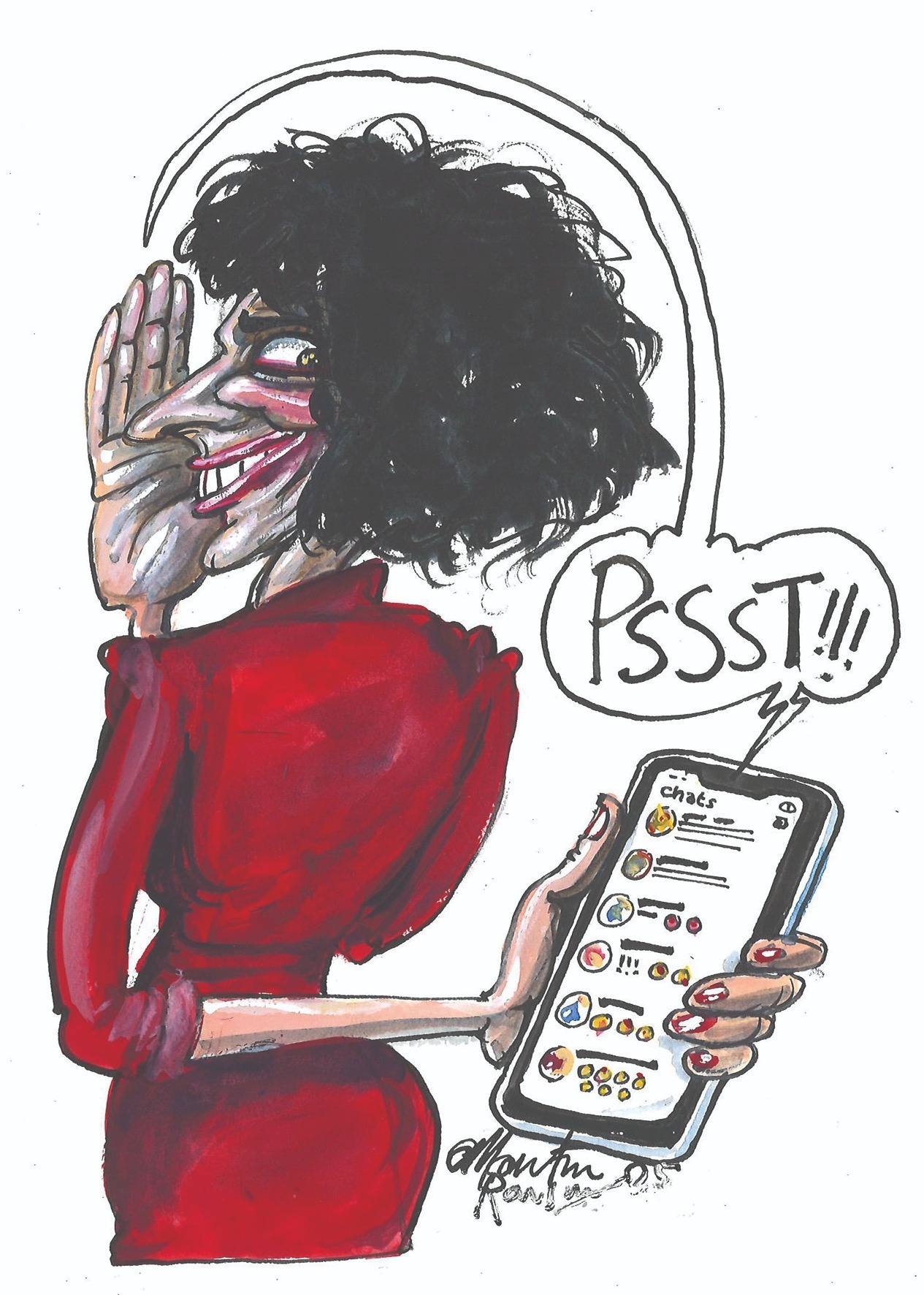
A few decades ago, I stopped gossiping and it changed my life. It was something I used to be good at. “Gossip,” the playwright Sholem Aleichem is credited with saying, “is nature’s telephone.” I thought it made people like me. But I learned that while people love gossip, they don’t respect the person transmitting it. Giving up was liberating. My friendships became more meaningful and people trusted me with far more of their secrets.
By then, I also understood how damaging it could be. When I started on the comedy circuit, a rumour spread that I’d had an affair with a very famous comedian, a man I hadn’t even met at the time. Years later, when I finally did, I had a laugh at the absurdity. But it wasn’t funny in the 90s when “slag” was still used liberally to denigrate women.
Recently, I have let gossiping back into my life. But warily, like a controlled substance. I understand that the high of sharing can be followed by a crash of shame and regret. And I’ve also discovered that the way that people gossip now has changed. In my youth, you might scrawl it on a toilet door, or hear it whispered second or third hand … it moved more slowly, shifting as it went.
My daughter, who is 12, inhabits a different world. For her generation, gossip doesn’t need bathroom walls. It moves at the speed of Wi-Fi, via WhatsApp and Snapchat. She isn’t allowed her own phone, so she has to peer over friends’ shoulders to keep up. But the basic patterns haven’t changed. In her class, there’s still the one girl “who can’t be trusted”, because the minute you tell her something, she runs straight off to repeat it. She is, in her way, a living link to the old days, when gossip required energy and nerve, rather than an easy click.
Is it a skill, in its own way? Could there be something good about it? Anthropologists point out that gossip is not just trivial chatter but a mechanism of social order, a way of reinforcing who belongs and who doesn’t. It is as much about morality as about amusement.
I used to live in an area of London where appearances seemed very important. One day, I popped over to a neighbour’s house in my socks. Two years after I moved out, I bumped into someone who had just moved into my old street. “Oh!” he exclaimed. “You’re the one who used to run around barefoot!” I’d done far more shocking things while I was living there, but it was my shoelessness which became neighbourhood lore.
But while it can bind us together, gossip can just as easily divide us. And for my daughter’s generation, the stakes are even higher. The digital trail means that gossip is now permanent, searchable and infinitely shareable. A whisper that might once have died out in a week can be resurrected years later with a screenshot.
How will my daughter look back on all this? Will she remember the frustration of not having her own phone, always relying on friends? Or will she remember the feeling of being part of something larger than herself, even when it stung?
For me, gossip was a rite of passage. I learned that it was the illusion of a cure for envy, as the fleeting power it brings slips through your fingers. I was very hurt by gossip when I was an emerging comedian, but eventually came to understand that it was nothing to do with me, and everything to do with envious folk obsessed with bringing others down.
And yet, for all its dangers, gossip isn’t entirely corrosive. There is a warmth in it too, a sense of intimacy and mischief. When my daughter comes home and tells me the latest playground dramas – “spilling the tea”, as the young ones call it – I pop the kettle on and get out the biscuits.
Nature’s telephone is still ringing. We pick it up, we whisper, we laugh … as long as we know our limits.
This article is from New Humanist’s Winter 2025 edition. Subscribe now.