We talk to historian David Olusoga about revisiting the story of the Empire, religion in Britain – and why logic gets you nowhere on "The Traitors"
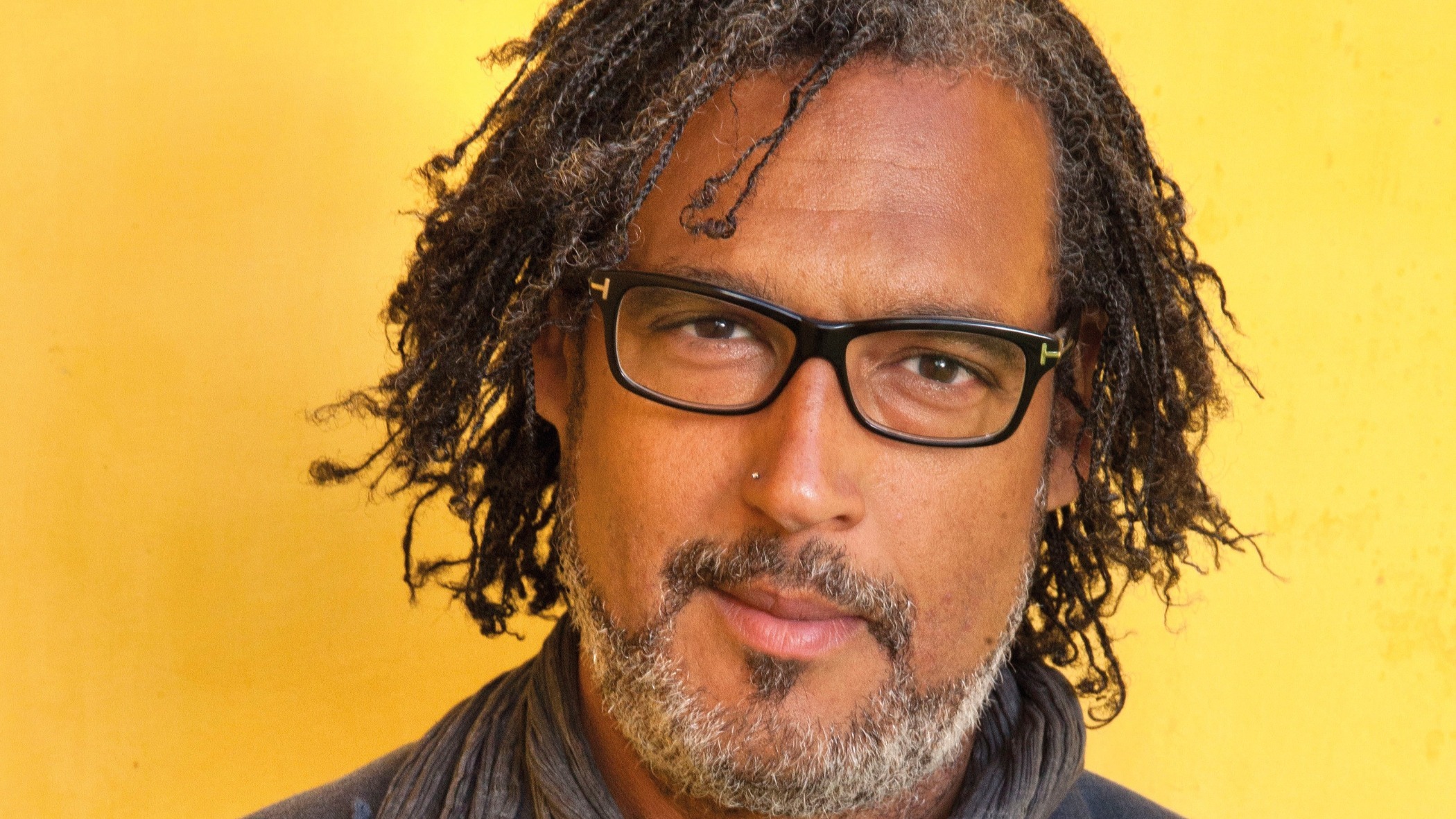
David Olusoga is a British-Nigerian historian, author, presenter and BAFTA-winning filmmaker. He is professor of public history at the University of Manchester. His most recent television series “Empire” – which explored the history of the British Empire and its continuing impact today – aired on BBC Two last year.
Let’s start by talking about the BBC series Empire. What was the motivation behind it?
We have conversations about the British Empire in this country as if we are the only people involved, which, given the nature of empires, is not possible. We often ignore the fact that conversations about the Empire are taking place in those many countries that were formerly British colonies.
There was a huge debate about the meaning of the British Empire in India – historians like Shashi Tharoor are kind of superstar historians because their ideas and their writings about the Empire have become enormous. In the Caribbean, there’s incredible scholarship, but also heritage work and memorialisation.
This conversation about the Empire is not a monologue within this country. It needs to be a dialogue with the countries that were colonies or territories of the British Empire. So the aim is to try to explore the story of the Empire as a history that is being revisited by people across the world. Because more than two billion people are citizens of nations that were formerly British colonies or protectorates or dominions.
What has the reaction been like?
Most people’s reaction to most aspects of history is that it’s interesting – not that this is a challenge to who I am, or an insult to my nation. And the viewing figures for Empire – it was one of the most successful factual programmes on British television in 2025 – show that most people are willing to engage in recognising that there’s much about the Empire that we don’t know.
But we do live in a moment when there is a kind of rearguard action to defend an “island story” version of the Empire, which takes any acknowledgement that the British Empire, like all empires, was at times extractive [as an unfair criticism].
What’s your response to this defensive attitude?
The British Empire lasts 400 years. It involves millions and millions of people, and there are all sorts of motivations and actions and behaviours that range from the genocidal to the purely altruistic. But the structure of an empire … people don’t set sail to set up colonies in order to benefit the people who already own the land. Empires, by their nature, are about the mother country, the imperial power, more than the colonies.
But the expectation is that this is a history that must be dealt with as a piece of historical accountancy – that if you cover [a negative aspect of the Empire, you must cover a positive one]; if you talk about the Indian famines, you must talk about the Indian railways. When I write about the First World War, nobody ever confronts me for talking about the strategic failures of the generals on the Western Front, or the death toll, or the suffering in the trenches. This only happens with the subject of the British Empire, and particularly anything to do with slavery, where we suddenly feel that we have to be talking in terms of “balance”.
Much of the hostility towards anything to do with the Empire is just a desire to not have to hear difficult things about Britain, and they’re only difficult if you have a magical and exceptional view of Britain, that Britain is a nation unlike every other nation that’s ever existed in all of human history.
Does your work on the Empire feel personal? The phrase that people sometimes use is “we are here, because you were there,” right?
I don’t really think about myself that much, because I don’t look to history to give me a warrant to exist in my own country. There is this idea on the far right that the history of Empire and black history are ways of people of colour claiming their right to be in Britain. I don’t feel that needy. I pay my taxes, I contribute to my society. I don’t need there to have been earlier generations of black people in Britain.
However, I do deploy my background within story-telling, because I’ve been making television programmes as a producer and presenter for a long time, and I’m very good at understanding how to use your own experiences to make stories more impactful. So we end the Empire series with me deploying my ancestors to make the point that confronting the history of Empire, recognising it as part of our history, is not something about guilt or pride.
My Nigerian ancestors were in a town called Ijebu Ode in the 1890s that was attacked by the British, so I’m descended from people who were attacked by the British army. But one of my ancestors on my mother’s side was a Scottish soldier in the pay of the East India Company. So, if I did history in the hope of eliciting guilt from white people, I have a rather large Achilles heel.
I’ve experienced something similar myself. I read a review of one of my books about scientific racism, which argued “well, he would think this, because he’s half-caste.” That’s not a word I would use myself. But I still had a moment of self-reflection, asking myself, “would I be making the same arguments if I didn’t have Indian parentage?” I concluded that the answer was yes, but it stung me in a peculiar way.
These arguments aren’t arguments. They’re attempts at silencing people, at saying that certain voices saying certain things are illegitimate. What these arguments are all saying is, “I don’t like what this history is saying. Therefore, it’s not real history.” It is easier to attack the messenger than it is to deal with something that you’re uncomfortable with.
Episode two of Empire was particularly striking for me, because it’s about a story that I think isn’t well told – about this period of indenture. As you know, my great-grandparents were Indian indentured slaves (I’ve made a personal decision to use the word “slaves”) brought to Guyana. Could you describe what happened in this period?
In some ways, after slavery was outlawed, the British went back to what they had before slavery, which was the indenture system. British poor people would sell their labour for a period of years – five, sometimes 10 or longer – and they were transported to the colonies. They would then work for a free settler for those number of years, and at the end of it, they were freed. (If they were lucky; this didn’t always happen.)
But the story of indenture from one part of the Empire to another is particularly unknown because there’s no connection to Britain. In the case of India, somewhere between one or two million Indians left to become indentured labourers. There was a huge range of experiences – from the murderously exploitative to, you know, extremely positive for people being able to transform their lives, escape caste, buy land. It’s a system that lasted from the early 19th century, with some stops and starts, right through until almost the First World War.
Can you tell us about how your family got here?
My father was from Nigeria. He was studying here in Newcastle [when my parents met]. Then my parents moved to Nigeria and I was born there. They then separated and we moved back to the UK. So I’m a 1970s story of movement around former Empire connections, because Nigeria had been a British colony. I grew up in Gateshead, near Newcastle, and it was not a very diverse place in the 70s and 80s. It still isn’t. I was brought up in a white, working-class world with my grandparents and my mum and siblings. I have a strong feeling of affection for the north-east and a strong sense of belonging and identity to that.
What’s your family’s relationship with religion?
My mother worked really, really hard to not ever say what she felt, and we went through a normal comprehensive school system with the sort of religiosity and religious education lessons that you’d expect. It [the existence of God] just always struck me as really unlikely.
But I remember being young and thinking that believing in this stuff was part of being good, and I wanted to be good and to do my homework and not get in trouble and not upset my mum. So there was a feeling of “you should believe in this, and you should say the prayers and sing the carols” and all that sort of nonsense. There was a brief period when I went to Sunday school, because it was what you did if you were trying to be a good boy. But that clashed with the fact that I just always felt it was nonsense.
As I got older, I just wanted nothing to do with it. One of the challenges I’ve had as a historian is that I’m so disinterested in religion. And I’ve had to make myself [engage with it] because you can’t study the past when for almost everybody, part of their calculations, for every action that they took, was what was going to happen to their mortal soul. So I forced myself to read religious history, and particularly around the early Church, which was the university of the world. It was the centre of learning.
What about the relationship between the Church and chattel slavery?
The Church was involved in justifying slavery, but it was also involved both with the abolitionists and with enslaved people themselves, who found inspiration in the biblical stories – the obvious stories of Pharaoh and the escape from Egypt. So it was involved in every aspect. There were religious figures who justified slavery. There were religious organisations and individuals who owned enslaved people, who promoted and propagandised for slavery. And there were religious voices who were motivated by their religiosity to oppose it.
And the influence of the Church today?
I do resent living in a country where it is very difficult to educate your children without them being indoctrinated in religion. I believe in absolute toleration, but I am opposed to religious privilege. I don’t see why we have bishops in the House of Lords, having power in our political system. I don’t accept that collective acts of Christian worship should be imposed upon my child, or anybody else’s child. I also think that religious schools are becoming increasingly a force for disunity in the country.
It felt significant that Tommy Robinson did a Christmas carol service last year, which attracted more than a thousand people, and he’s had support from figures like Elon Musk. What do you think about Christian nationalism in the US, and the efforts to export it over here?
I think it’s people with a lot of money who can’t accept how different Britain is to America. You can’t have Christian nationalism in a country that’s essentially not a Christian country. But if you’re trying to keep your American paymasters happy, if that’s where the money coming in from America to foment greater division in Britain is coming from, then you have to do what your paymaster says.
Last time I went to church, it was young Nigerians and very old white British people. And if you go to a Catholic church in many parts of this country, everyone’s Polish. So if you’re interested in bums on seats, Tommy Robinson is not the obvious conduit to achieve that.
I’d like to see him go to church in north-east London with a big Nigerian community. See how he gets on there. But before we end this interview, we have to talk about something more light-hearted. Your appearance on the The Celebrity Traitors.
I was somehow in the final, which has been one of the most watched moments in recent TV history. It’s been interesting being involved in something, at this very difficult time, that made people really happy. Sadly, what made them really happy was seeing those of us who appeared to be incredibly incompetent. So it would have been nice to have made people happy with competency, rather than incompetency.
Rather than incompetency, wasn’t it that you were making very rational, evidence-based arguments, that were just always unfortunately wrong?
I’ve been trying to think about what happened. I spend my life reading, gathering evidence, and then trying to weigh it out, but when there was no evidence, I entered this kind of desperate starvation state, looking for it. I think my theories were entirely rational, but they were also entirely wrong. So for example when Stephen Fry suggested that we should not have discussions at the roundtable and instead we should just vote, most people went, “That’s interesting, Stephen,” and I went, “That would be really useful if you were a traitor.”
So you went for him.
You know, in lots of Victorian novels, there’s the boring accountant that the young woman doesn’t want to marry, and then the exciting cavalry officer? I feel I proved myself to be the boring accountant.
You’re Daniel Day-Lewis in A Room With a View.
Exactly. I should have been the young guy with my chest out, in the field, kissing Helena Bonham Carter.
Did doing The Traitors help restore your faith in TV? This is an industry that is slowly being eroded, and the BBC is constantly under attack.
Well, it didn’t change the BBC being under attack – we’ve lost a director general since Traitors went out. But it is a phenomenon. When I was a kid, when everyone watched something, the whole nation had been through this shared experience. It’s very rare now. The big TV hits of last year were Adolescence and Traitors; they couldn’t be more different but they both began national conversations.
But my passion for TV is because that was a way I could do history. I had a kind of fork in the road. I had to choose the academic path and the PhD that was in front of me, or do something else, and I wanted to do history in the way that it had enraptured me when I was young, which was watching it on television. The person who made me want to do TV – alongside my history teacher Mr Faulkner – was [the historian and BBC presenter] Michael Wood.
But also, I was brought up in a council estate. I had that deep fear of debt that people brought up with no money have. TV offered me a way of doing history and getting paid. Meanwhile, a sector like academia, in which you have to self-fund the necessary qualifications to advance, is closed to a great majority of the population.
What is it about Michael Wood’s work that particularly inspired you?
He did In Search of the Dark Ages and a whole series of different history projects with the BBC. He was often talking about what we don’t know. And I love the idea of unknowability. That’s what I try to do on television, to get to that precipice of what is knowable and unknowable, and then ask questions of the view.
The magic of history is that you can know enough to empathise with people who lived and died before you were born. You can imagine yourself in their situation, and that connection with people of past centuries is a magical thing. I feel deeply emotional about history. Sometimes I’m in an archive, thinking about someone who’s been dead for 100 years. I’m the only person in the world thinking about their existence.
Talking about humanism, it’s that idea that they [people from history] are exactly the same as me, and that I can imagine what they must have gone through, what the city that they walked through was like, and how different it is from the one of today.
I think exactly the same about evolutionary history. It’s just that the history I study is a bit older than yours. For example, the peopling of the Americas is a big question. And a couple of years ago in White Sands, New Mexico, they discovered fossilised footprints that put the date of people there several thousand years earlier than we’d previously thought. The paper described the prints of a young person, possibly a teenager, going out for a looped walk, which lasts about a mile. And at several points there are the footprints of a two or three-year old, but they come and go. So that’s a person with a toddler, and the toddler’s tired, and you pick it up, and it walks for a bit. Twenty thousand years ago, people were doing exactly what you do in a park on a Sunday morning with your child. That is what you’re talking about, for me.
I remember that. Maybe it’s because I was new to fatherhood when it came out. But just … the universality!
So, what’s next? Will you be doing Strictly Come Dancing?
It’s been mooted. I think I could do Strictly for one reason, which is that I’ve spent a lot of my life fighting against racial stereotypes. And I could destroy the racial stereotype that all black people can dance. But no, I think the country has suffered enough.
This article is a preview from New Humanist’s Spring 2026 issue. Subscribe now.