
Why is poetry such a powerful political force in Myanmar?
Frontline Poets (River Books) by Joe Freeman and Aung Naing Soe
Talk of male anatomy was the last thing I expected as I walked into a book launch at Bangkok’s foreign correspondents’ club. Yet there it was, beaming across the projector screen: a poem about a political penis tattoo. “On my manhood rests a tattooed / portrait of Mr. President / My beloved found that out after / we wed / She was utterly gutted / Inconsolable.”
This is the most reserved translation of a terse, subversive piece written by Maung Saungkha, a poet in Myanmar. When he posted his work to Facebook in October 2015, he “dropped the poetic equivalent of a bombshell,” according to a new book by journalists Joe Freeman and Aung Naing Soe – a bombshell that led to six months behind bars for online defamation of the president. It was while covering this bizarre court case that Freeman and Aung Naing Soe first met Maung Saungkha. A decade on, he is one of five poets they have profiled in a deeply moving, often humorous book that repeatedly defies expectations.
While it includes several works translated from Burmese to English for the first time, this is not a poetry anthology. Rather, it is a history of Myanmar told through the lives of poets who have not only chronicled but actively participated in decades of political upheaval, resistance and conflict since the end of colonial rule. Yet its main goal is not to explain Myanmar’s many deep divisions, or why the 2021 military coup and subsequent civil war unfolded. Instead, at its core, the book is an exploration of why poetry is still such a powerful force in Myanmar, where the literary form continues to be a vehicle for resistance and identity. Writers evade military censorship with obscure metaphors, short works become rebel anthems, and poignant poems allow people to reflect on all that they have lost.
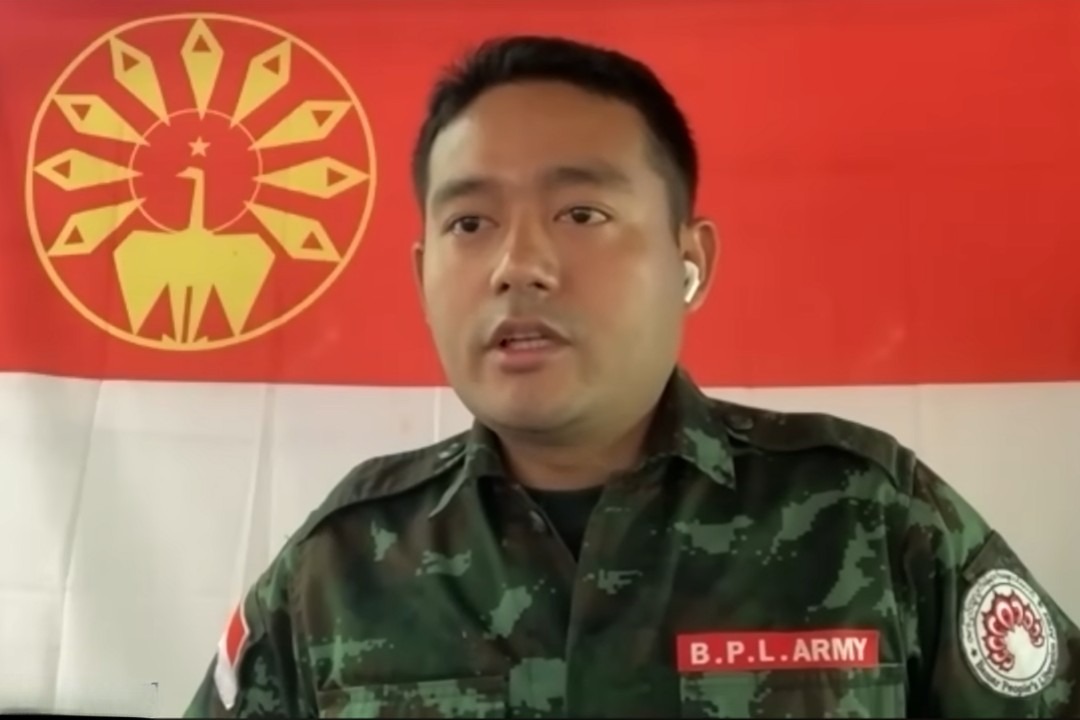
“I abandoned everything after I had abandoned everything” is one especially gut-wrenching line, in a long, tumbling poem by Yoe Aunt Min that depicts the mind of a rebel fighter. After the coup in February 2021 and the junta’s violent crackdown on peaceful protesters, Yoe Aunt Min followed Maung Saungkha into war. Maung Saungkha had become the leader of an armed opposition group called the Bamar People’s Liberation Army, and Yoe Aunt Min was one of his first recruits. Their journey from poets and activists to armed fighters living in the jungle hits on another theme in the book. Yoe Aunt Min’s vivid, meandering poem points at this shift in her own life, before concluding: “What kind of wisdom is necessary for those who hold / lethal weapons? / I don’t know how to solve this. / Please answer.”
The book asks what it means to be a frontline poet – whether that frontline is Maung Saungkha and Yoe Aunt Min’s battlefield, the street protests that cost another poet, K Za Win, his life, or the displacement camps where two others, Lynn Khar and A Mon, fled to safety. Yet despite the palpable sense of loss, the narrative balances heartbreak and horror with humour, humanity and – much like the penis poem – the unexpected.
The book evokes a vivid picture of life in Myanmar, and of the poets who remain determined to better their country against extraordinary odds.
This article is from New Humanist’s Spring 2026 edition. Subscribe now.