Comedian Olga Koch talks class, culture and how to deal with parasocial relationships
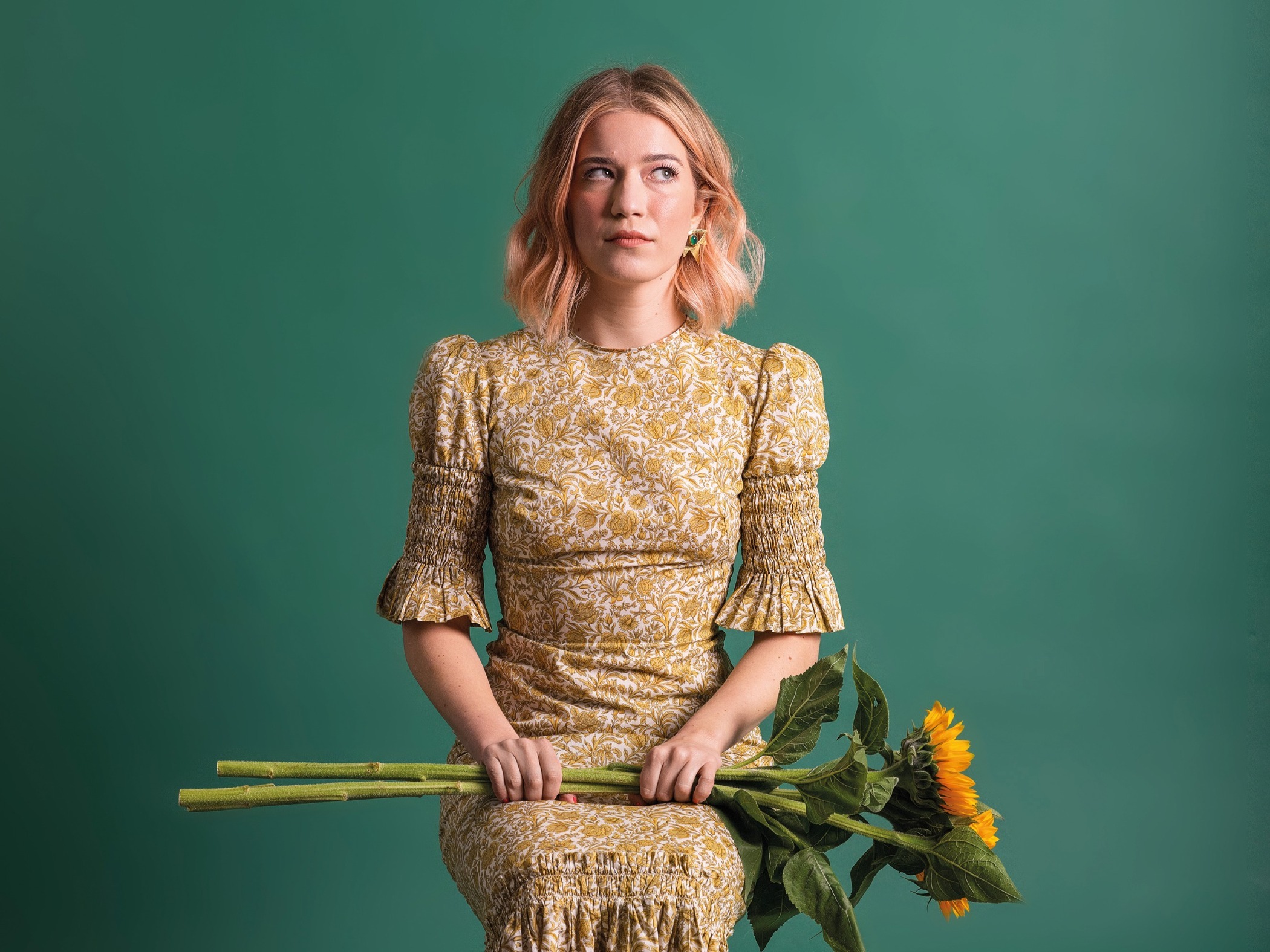
Olga Koch is a Russian-British comedian. Her award-winning debut show “Fight” told the wild story of how her father briefly served as deputy prime minister of Russia in the 1990s, under President Boris Yeltsin, but later fled the country. She has appeared on television shows including “Mock The Week”, “QI” and “Live at the Apollo” and is working on a PhD in human-computer interaction.
Your new one-woman comedy show “Fat Tom Cruise” is touring in Britain and Australia. It’s described as “immersive” and “genre-defying”. What does that mean?
I want to keep it as vague as I can to preserve the element of surprise. It’s a history lesson, it’s a gossip session and it’s a horror story. I’m really honing my storytelling abilities but also using a tremendous amount of tech in a way that I never have before.
There’s quite a bit of time travel. We’re going from the 70s all the way to the present day and the jumps occur constantly, so it’s a matter of creating a visual language for the audience to understand what timeline we’re in without constantly having to remind them. It’s like watching movies that do a really good job of signposting where you are at the very beginning and then later on you don’t have to be reminded what year it is. So, how do you achieve that on stage with one person who’s wearing the same outfit throughout? It’s a really interesting challenge.
Your first show explained how your dad came to play a key role in Russia’s privatisation efforts in the 1990s. Having moved to the UK when you were 14, is there anything you think the west gets wrong about Russia?
I’m very careful about not co-opting the experience of living in Russia or being Russian today because I truly don’t know what it’s like. Me and my fiancé went to Paris last weekend, and we went to Napoleon’s tomb. On the tomb is every battle he won, and one of them is Moscow. I have never in my life been so angry, because I was like “He didn’t win Moscow, we gave him Moscow! That was a strategic military decision to leave Moscow, light it on fire and then let him have it.” My fiancé was like “I’ve never seen you this angry, and I’ve never heard you refer to Russia as ‘we’ before”. I think it’s because I have as much claim on the Napoleonic wars as any Russian living today, whereas I don’t feel comfortable saying “we” when it comes to Russia now.
That being said, in some aspects the Russia that I lived in and remember was significantly more progressive than people give it credit for. I have a joke that Russia was one of the first countries to grant women the right to vote – in a single-party state. But my grandmothers were engineers and the idea that I would study computer science [Koch has a degree in the subject from New York University] was not as crazy in Russia as it felt in the US at the time I was studying. Obviously, Russia, especially in the last 10 to 15 years, has become more traditional and religious than before, but in the country that I was raised in, some things were more progressive than people realise.
In “Fight”, you mention an interesting anecdote about visiting the “Museum of Democracy” – officially the Boris Yeltsin Presidential Center – in Yekaterinburg and seeing that your father had been written out of history. What did you take from that moment?
It was a matter of growing up. The thing that really struck me is how well produced the museum is. It’s a really high-budget operation. They have a recreation of the president’s study there, you walk in and they play Yeltsin’s resignation speech, and it feels very emotionally powerful. And then you leave and realise you’ve just been successfully manipulated into feeling all these things in a sort of Disney-level production.
I was in my early 20s at the time and it generally made me more cynical when it comes to museums and countries writing their own histories as a whole. You know how the domino falls for everyone at some point? That was my sort of red pill Matrix moment – although not in the context of how “red pill” is used today, of course!
In your previous show, “Olga Koch Comes From Money”, you explored what it means to come from privilege. What made you write about that?
I think socio-economically we have reached a boiling point where it’s something that we can no longer ignore. It’s something that needs to be discussed, and it felt very cruel and unfair that the only people who are forced to have that conversation are people who come from working-class backgrounds. As a person who comes from tremendous privilege, the silence of that became deafening.
But also, after 10 years of doing stand-up, I felt – maybe wrongfully so or rightfully so – that I finally had the writing and performance ability to tackle a subject like that. It was one of the most agonising processes because I wanted to do it in an aggressively objective way, but there was a constant understanding of my own inability and failure to do so, because I’m so entrenched in it. There’s a silly gag in the show, “There’s only so much self-awareness and perspective I can have. It’s like taking a selfie – my hand can only extend so far before I have to hand my camera to my butler.”
You have experience of how different countries and cultures view money, and in the show you talked about the various moral mythologies around it.
Yes, so in Russia, money is luck, in America, money is hard work – with the caveat that people can work hard doing bad things – and then in the UK, money is something you get from your dad. Every country or culture thinks that theirs is the objective and correct attitude, when in reality there is no such thing.
The other big theme in your comedy is tech, and you’re doing a PhD now in human-computer interaction. What does that mean?
Oh boy, if I knew. It started in the 80s but now that computers are everywhere, everything is human-computer interaction. You unlock a door and it’s a computer now, because we don’t use keys anymore. You use a microwave and that’s human-computer interaction because it has a microchip in it. So it used to be how you interacted with a computer at work and what the interface would look like, and now it’s literally everything because we’re putting microchips everywhere.
One of my biggest pet peeves in life is putting a microchip in something that doesn’t need it. A door doesn’t need it, a scale doesn’t need it – there’s even electronic toothpaste dispensers. You can’t squeeze out your own toothpaste? Come on, buddy. The amount of tech waste we are creating with all these micro things, it makes me so angry.
What’s the focus of your PhD?
Parasocial relationships [one-sided relationships that people develop with someone they don’t know, such as a celebrity or social media influencer]. I used to think that parasocial relationships were an anomaly or almost pathological. But then when I met people who have all these intense parasocial relationships – for example, people who have one-sided conversations with celebrities constantly on social media – I realised it was the most normal thing in the world. If you are exposed to personal information about a person, which we are every day on Instagram stories, it is totally normal for your brain to short circuit and think you know this person. I got interested in it because I started experiencing it myself in some small way. People have seen the inside of my house, people have seen me without make-up, in settings that 30 years ago only a close friend or family member would have seen me in. Of course your brain thinks you know me.
It’s a weird phenomenon, but is it a problem?
The problem isn’t people developing any of those feelings or attachments; the problem is the technology that is actively encouraging it in order to increase screen time and addictiveness. People experiencing the effects of the technology aren’t to blame, it’s the architects of the technology. I don’t know if they know the true repercussions [of what they’re doing].
After your PhD, I hear you have plans to go into tech communications?
That’s always been the dream. I think that comedy is the best way to learn things. As children and young adults, we’re okay being patronised when it comes to learning things, but the older we get, the more sensitive we get to feeling like somebody’s patronising us or teaching us something. Comedy is a great way to sneakily teach people.
I read this paper that I keep coming back to. It said that people who watch satirical news shows are actually as, if not more, informed than people who watch the news. But satirical news shows do something that the regular news doesn’t do, which is give context. If John Oliver or Jon Stewart explain something happening in Congress, on The Daily Show or Last Week Tonight, they’re never just giving you that piece of news in isolation. They’ll go through the rigmarole of explaining “This is how the Congress works”. But because they’re doing it in a comedy setting, you don’t realise you’re being taught. I mean, Horrible Histories – what’s that? If you’re laughing, you don’t realise that you’re learning.
“Fat Tom Cruise” is touring until 4 December.
This article is from New Humanist’s Spring 2026 edition. Subscribe now.