Jason Burke's history of "the extremists who hijacked the 1970s" is a rollicking tale – but also a cautionary fable
The Revolutionists: The Story of the Extremists Who Hijacked the 1970s (Penguin) by Jason Burke
As the subtitle of this book acknowledges, hijacking has a metaphorical resonance as well as a literal meaning. Both describe the garnering of widespread attention by the determined actions of small and reckless groups or individuals. The key characters in this rollicking narrative number barely a few dozen, but they transfixed hundreds of millions throughout the 1970s.
“The Revolutionists” is a clever title, correctly implying a difference between Burke’s protagonists and actual revolutionaries – who, while no less zealous, are also organised and methodical, which is why they sometimes win. Revolutionists, by contrast, are essentially grandstanders and cosplayers, vastly more interested in means than ends. A revolutionary may see the application of violence as a regrettable necessity. A revolutionist is more someone who quite fancies striking poses in a beret and Raybans, and blowing things up, and seeks an excuse.
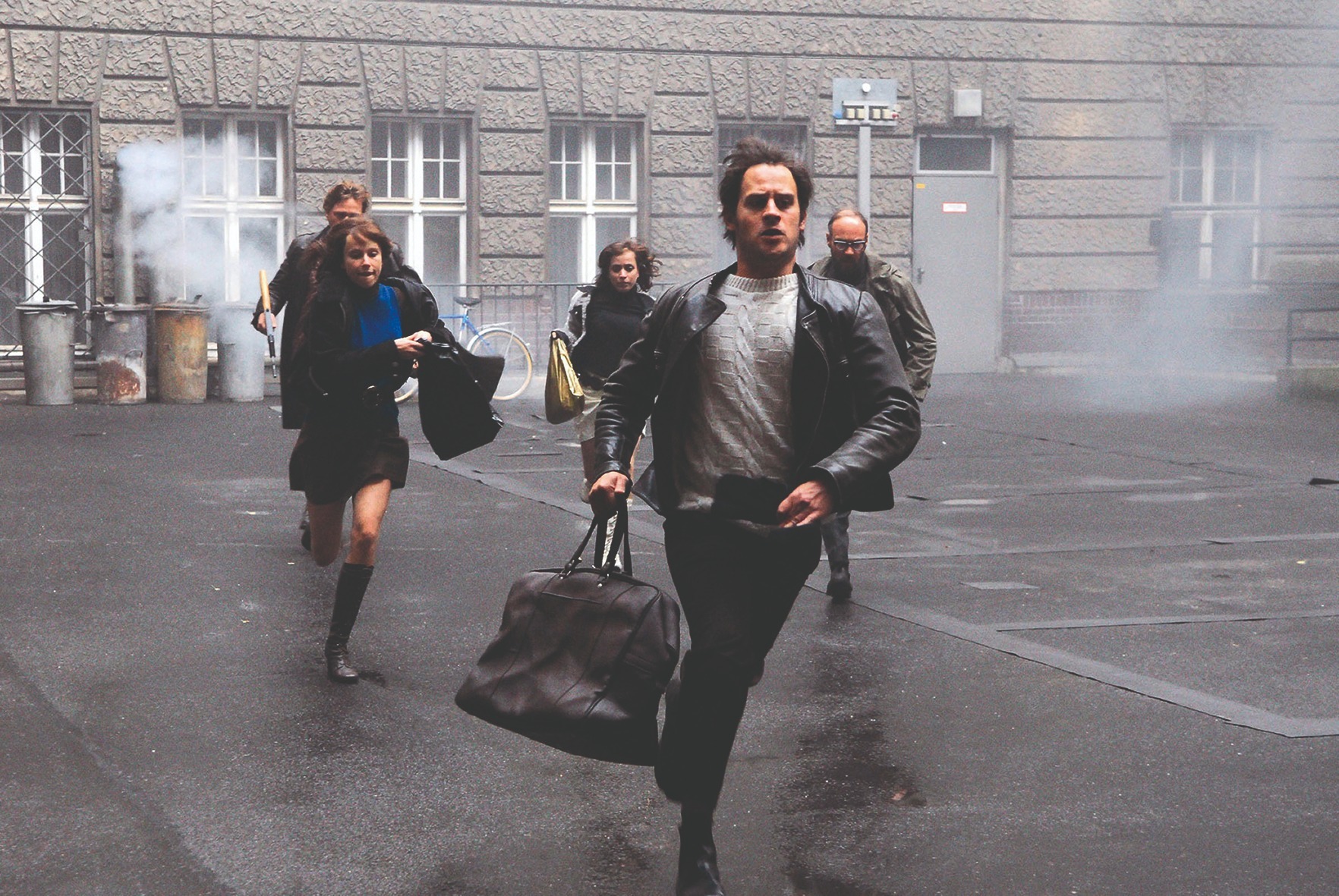
If one personality exemplifies the revolutionist, it is Andreas Baader: a twenty-something drifter who dominated West Germany’s Red Army Faction to the extent that it became interchangeably known as the Baader-Meinhof Group, after Baader and fellow militant Ulrike Meinhof. Burke describes Baader as “spoilt, arrogant and lazy”, and notes that he was “uninterested in politics and unmoved by progressive causes”. Baader was, however, extremely keen on fast cars, women, drink, drugs and the adoration of credulous supplicants. He went to extraordinary lengths to maintain supplies of them.
Baader and his comrades allied themselves early on to the budding militancy attached to Palestine, making their first visits in 1970 to the training camps in Jordan being operated by Fatah, the largest faction of the Palestine Liberation Organisation. The pages recalling the first trip undertaken by the Red Army Faction to Jordan are rich black comedy. “The following weeks could not be described as an unqualified success,” understates Burke. The Germans whined about the accommodation and the food, wasted precious ammunition acting the cowboy on the firing ranges, and annoyed their hosts with their general performative bohemianism. Nor were they the only vexatious guests (“A group of British International Socialists smuggled alcohol into one camp, got drunk, held an impromptu sing-song, and then got into a fight with a group of British Maoists.”)
Burke is the Guardian’s international security correspondent and the author of several excellent books covering al-Qaeda, Islamic State and other manifestations of a more recent fanaticism. The Revolutionists serves as something of a prequel to his previous works, suggesting a legacy even more baneful than the casualties of the bombings, hijackings and kidnappings wrought by its subjects: that the self-indulgence, self-regard and eventual self-destruction of this broadly secular pro-Palestinian tendency helped bring forth the theocratic nihilists of later decades.
The Revolutionists is a brilliantly told story with many dimensions – Burke also furnishes the wider geostrategic contexts to the follies of the players, even if many of them were ignorant of, or indifferent to these diplomatic shadow plays. It is mostly, however, a story – it might be hoped a cautionary fable – of failure. Things ended badly and/or early for most of the individual “revolutionists” – though some are still with us, including Ilich Ramírez Sánchez, the prolific Venezuelan terrorist better remembered as Carlos the Jackal, now serving forever in a French prison.
And while the revolutionists may have got their pictures in the papers, and though they spawned a minor industry of literature, cinema, music and sundry popular culture, it is difficult to make any case that they, or their approximate contemporaries, much advanced any of the actual causes for which they claimed to have taken up arms. The Red Army Faction and similar groups in Italy, Japan and elsewhere fell some way short of dismantling capitalism, while Palestine, for all the picturesque mayhem wrought on its behalf, is arguably further than ever from being a functional sovereign state. The revolutionists did nothing good, and nothing good came of what they did.
This article is from New Humanist’s Spring 2026 edition. Subscribe now.