Meet the therapists helping people leave religious groups and build their own belief systems
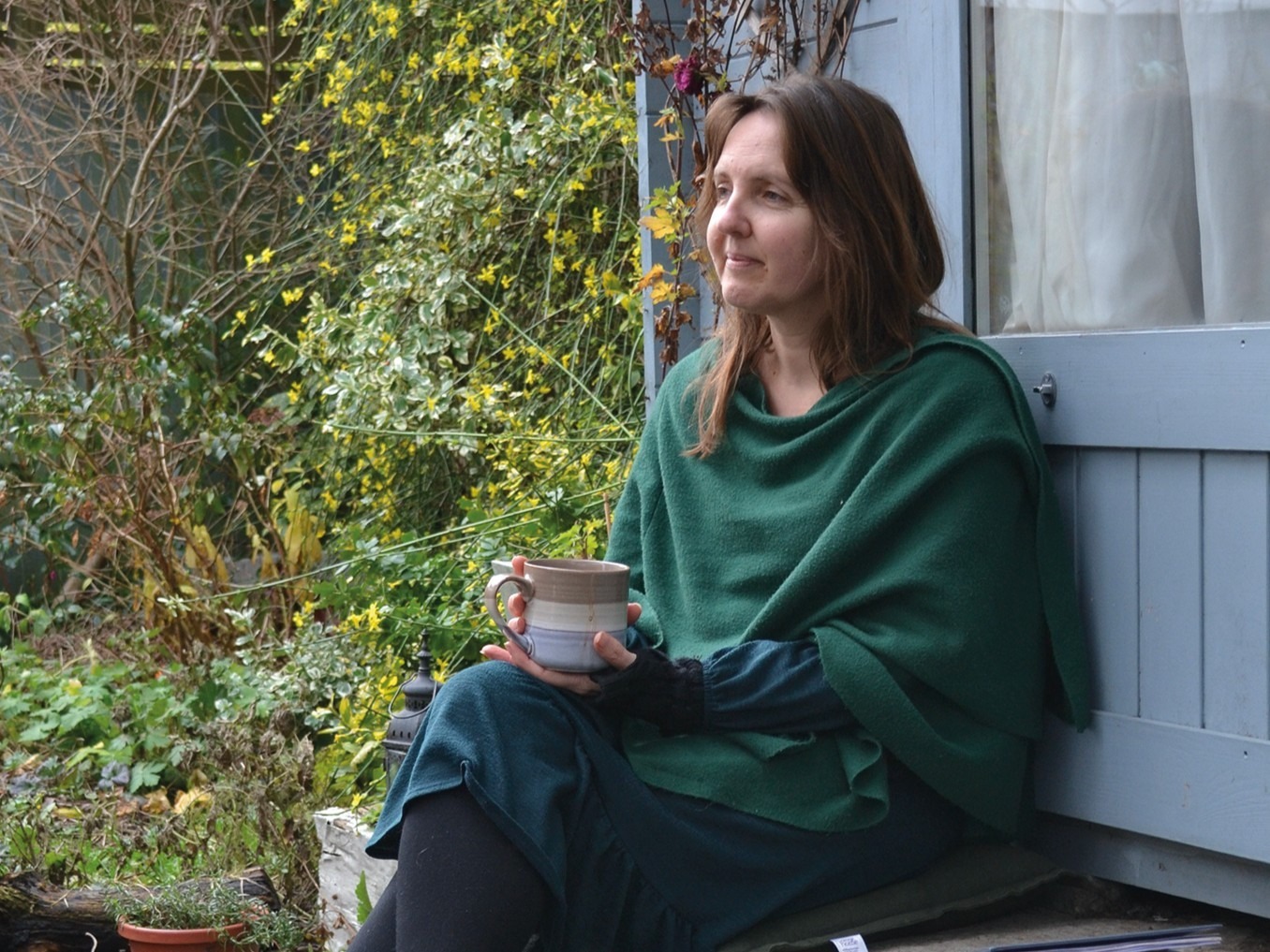
At 21, Joy Brooks had spent her whole life as a member of an evangelical charismatic church in Leicester. Her husband and three children were part of the community, too, and she worked for the Church as an events producer. But she was struggling to cope with her job, and was burning out. Her husband suggested stepping away from the community for a bit. At first, she was uncertain. “I was thinking, ‘I’m going to destroy my kids’ lives if I pull them out [of Church],’” she tells me. But his concern for her mental health gave her pause. “I now know he was thinking, ‘We’re never going back’. He opened the door enough for me to leave.”
Brooks now describes herself as agnostic, “with an allergy to certainty in religion”, while her husband believes “there probably is ‘something’, but he wouldn’t claim to know much more than that”. Having seen other marriages end after one party left the Church, she feels lucky that they moved together. But it still came at a personal cost. “About 90 per cent of our closest friendships ended,” she says. “The relational loss was the thing that hit first, before the loss of beliefs. At first I was too scared to let my beliefs unravel because I couldn’t face losing anything else.”
Twelve years on, Brooks has a Master’s in counselling and provides therapy for people questioning their faith. She’s also a host of Nomad, a podcast for Christians who are questioning their faith, and works part-time as an NHS counsellor. As a private therapist, she specialises in working with clients who are “deconstructing” their beliefs. This is a relatively new term used to describe the process whereby people untangle their own ideas from those imparted by their faith, examining where these might overlap, and where they don’t.
The term originated in the US, where it was originally connected with the “exvangelical” movement and used to describe people leaving conservative evangelical Christianity, often taking on more liberal positions but not necessarily leaving the faith altogether. That same year, non-denominational pastor and author Brian Zahnd defined “deconstruction” as “believers in the process of paring away the extraneous elements of culture, myth and toxic dogma from their faith”. In 2019, a piece published by Premier Christianity defined it as “what happens when a person asks questions that lead to the careful dismantling of their previous beliefs”.
This process can also be helpful for people leaving their faith, or breaking their connections with institutional religion. The proportion of Americans identifying as religiously unaffiliated – that is, atheist, agnostic or simply “nothing in particular” – has been growing for many years, although the latest stats suggest this trend may be levelling off. In the US, therapists offer “deconstruction” as a practice, and the term is starting to be used by some therapists in the UK, too, to describe the work of helping their patients navigate profound changes in their belief structure.
When Brooks became a therapist, she decided to specialise in deconstruction. For many clients, “the process is ongoing, maybe for decades or a lifetime,” she says. “But it’s not necessarily all really painful and difficult – there’s a lot of growth and stimulating exploration too.”
‘Post-cult counselling’
Therapy to support people leaving religion is nothing new, and there are many kinds of therapy designed to support survivors of religious trauma, or to guide patients through the challenges of leaving a religious community.
The psychotherapist Gillie Jenkinson has developed a new methodology aimed at people who are leaving, or who have left high-control religious groups. She was part of such a group herself, which she describes as “a Bible-based cult”. After leaving, she gained a Master’s in Gestalt psychotherapy and in 2023 published the book Walking Free, which outlines her “post-cult counselling” methodology. She also offers therapy sessions online and trains UK and international therapists in how to use her process.
Jenkinson says her work helps people to understand the dynamics of the group they have left. “This is the process of how they developed a cultic or what I call an ‘introjected pseudo-identity’,” she explains. “You need to change to become a [cult] member … If you’re born into the group, then you’re ‘introjecting’ constantly.” She describes this pseudo-identity as being like a “foreign” part that belongs to the group, “sitting over” the authentic identity. “For me it took me over. I fully changed when I was in the group.” The untangling process is painstaking. “As one of my therapists said, it’s like sifting sugar and salt.”
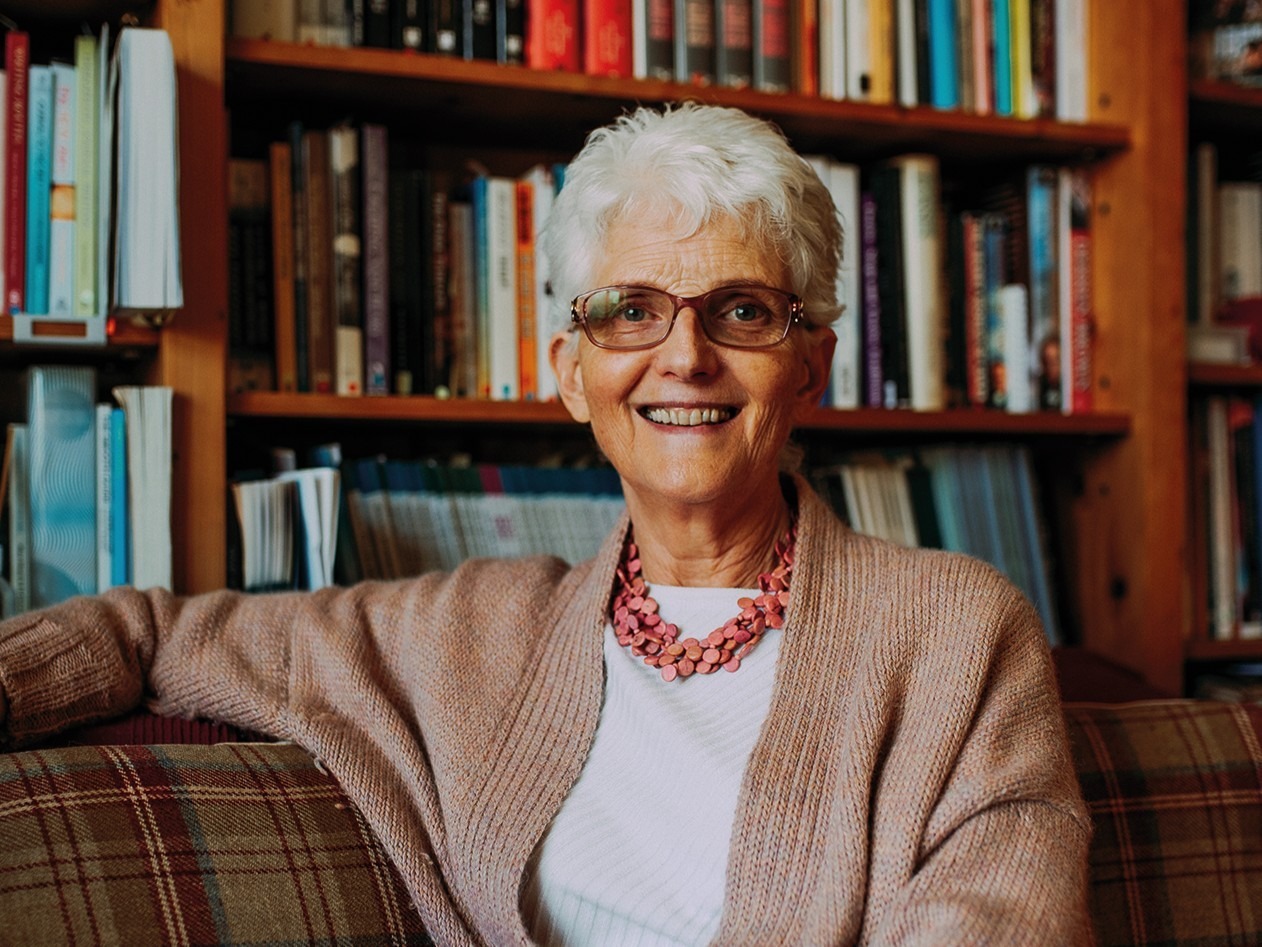
The idea of “deconstruction” helps to describe this process, which is not as simple as a total rejection. Some people choose to walk away from their religious group, but find themselves missing the positive aspects of being part of the faith or community. Abi Millar was brought up in an evangelical church in the north east of England but left at the age of 17, after several years of questioning. Later in life, she found that she missed aspects of her former faith, and began to look into secular forms of spirituality, which she writes about in The Spirituality Gap, published in 2025. Through psychedelics, somatic practices, meditation, nature and music, Millar has been able to discover new sources of profound meaning and deeper forms of connection with others and the world.
Millar tells me she didn’t have any therapy while leaving the faith. “I’m sure a therapist could have helped me, but it would have to have been someone specifically trained in these issues,” she says. “Back in the noughties (pre-Zoom) that would have been highly location-dependent and there wasn’t anything local to me.” Instead, she turned to informal support through online forums and books. “I fully believed myself to be ‘bad’, which I now understand is typical for people ‘leaving the fold’,” Millar tells me. “This was the water I swam in, and I didn’t recognise it for what it was: a cognitive distortion. Similarly, I didn’t frame my feeling of unsafety as a problem with me, so much as a problem inherent to the godless universe. It wasn’t till much later that I really grappled with it.”
Beliefs that linger
There are other ways to support the process of deconstruction, aside from therapy. Humanists UK, the charity that publishes this magazine, runs a programme called Faith to Faithless, which provides support and advice to those who have left or are leaving high-control religious groups, with support delivered by volunteers – some of whom have lived experience. The number of people using the programme’s peer support service jumped from 71 in 2023 to 260 in 2025. In February 2024, they launched a helpline, which has already responded to over 900 people.
One of the helpline volunteers, Iacopo, 39 – who did not wish to give his last name – grew up as a Jehovah’s Witness. He left in 2007. More than a decade later, during the first Covid-19 lockdown, he noticed that something did not feel right for him. At the time he was working for a corporation and says it began to feel controlling in a similar way to how the Jehovah’s Witness community had felt. “It was really very recently when I started deconstructing properly,” he says. “I started to notice that there were things about the way that I was behaving and the issues that I was facing that felt like patterns repeating.” He also found it difficult to shake the influence of particular ideas. He said that the impact of teachings about demons and possession lasted a particularly long time for him.
For the past couple of years Iacopo has worked with a therapist who follows Jenkinson’s “Walking Free” modality. He says specialist therapy was essential for him: “I went for somebody who would immediately get exactly what I’m talking about. That way, I can cut to the chase.”
While therapists with lived experience face particular challenges, they are also able to bring to bear unique insight and understanding. Aisha Khan is a therapist who draws on her own experience of leaving the Islamic faith. Growing up in the UK, she struggled to disclose to her family that she was not a Muslim. When she finally did, a friend – another ex-Muslim – suggested to her: “‘There aren’t many therapists who know what our struggles are. That’s something you should look into doing.’ I didn’t follow up at the time, because I wasn’t in a great place with that stuff myself,” she says. “But years later, I thought, ‘This is something I could support other people with’.”
Why specialists are needed
Khan is now an accredited therapist practising in Yorkshire. As she grew her specialism, she noticed two challenges that non-specialist therapists might face when working with people who are questioning or leaving their religion. The first is a failure to explore beliefs with clients. “People can present in session as religious, for example, wearing religious garments,” she says. “I’ve definitely been guilty in the past [of assuming they believed in that faith]. That’s one thing that I wish had been taught to me when I was in training. We don’t actually know a person’s religious beliefs if they don’t mention it.”
The second is assuming that faith is a “protective factor”, a term used in mental healthcare to describe something that helps someone cope, such as relationships, pets or a creative practice. But faith isn’t always “protective” and a lack of understanding increases the risks to clients, Khan says. For example, those struggling with their faith might be encouraged by their therapist to speak to people within their community, which can actually make things worse.
She experienced this herself after seeking counselling when she was grappling with how to tell her family. “There was a lot of having to explain why, for both the cultural and religious stuff,” she says. “One big area is that not all counsellors or therapists fully understand some of the risks that can be associated with leaving high-control religion. I felt like I had to fill in the gaps of why it wasn’t as simple as walking away, or sharing everything openly.” In new clients, Khan notices a lot of self-blame and perfectionism. “I often hear about guilt and shame, and that goes across all of the religions,” she says. “A lot of the time, people will be hiding parts of themselves from their loved ones.”
After a while, clients might begin to express a newfound vulnerability. “There may well be more existential themes coming up,” Brooks says. “People might say, ‘When I was anxious before, I used to be able to pray,’ or ‘I felt like God cared about me or would help me, and now I don’t know what to do’ – things around what helps a person feel safe in the world.” Khan says she also has clients with “sticky” beliefs. “Some people who’ve actually denounced faith completely and declared they aren’t religious anymore, still have this fear of hell,” she says. This is something she struggles with herself. “In my head I don’t think hell exists, but actually there’s a part of me that feels terrified that I’m going to burn in eternal torment. I can feel it in my body. That’s not an easy thing to tell someone.”
But while having personal experience of leaving a faith helps in many ways, it can also be a hindrance. Brooks says her greatest professional challenge is not to project her own experience onto her clients. Both personal therapy and professional supervision help reduce the risk of this. She’s been left with a lot of anger about the harm and injustice caused, but she sees her work on the Nomad podcast as a form of activism that fulfils her.
True freedom of belief
The wider provision of therapy aimed at supporting apostates, as well as other forms of advice and support, are also part of a broader cause to provide true freedom of religion or belief in the UK, which includes protecting the right of people to leave a faith. Religious affiliation in the UK is declining. Those saying they had “no religion” rose by 12 percentage points at the last census in 2021 and while this is largely due to religion “ageing out” (younger generations being less religious than older ones), a proportion of this shift will also be down to people changing their beliefs.
In 2023, the Bloom review into freedom of religion or belief recommended that the UK government fund services like Faith to Faithless as part of a wider package of reforms to protect those leaving faith groups, and those at risk of religious harm. The government hasn’t yet taken up the recommendation.
Whether people are receiving therapy or other forms of support, deconstruction is going to be a long and complex process. Millar says it took many years before she could untangle her old faith from her current desire to live a spiritual life. Today, she sees her departure from the Church as more of an arrival. “Over time, losing your religion may start to feel less like a loss,” she says, “and more like an opportunity to rebuild yourself from the ground up.”
In future, the idea of “deconstruction” may gain more recognition amongst mental health providers, particularly in countries where religion is in decline. And specialised therapists like Jenkinson, Brooks and Khan will be ahead of the curve.
This article is from New Humanist’s Spring 2026 edition. Subscribe now.