Exciting developments in genomics are helping us track diseases with precision. Are the benefits worth the moral risks?
The names of bacteria rolled off my colleague’s tongue like chocolate bar brands. “There’s all kinds of streptococcus, lactobacillus, E. coli of course, and that’s just the bacteria. You can find out the viruses, too. We’re talking mycoviruses, enteroviruses, astroviruses – oh, and the sample is always contaminated with human DNA.”
I thought for a minute. “So, I could be identified from a sample of my shit?”
“Not could – you already can be! You could call it … a data dump.” He chuckled.
I was talking with David, my office neighbour at the University of Oxford, about all the new information on humans and bugs that can be learned using cutting-edge methods in pathogen genomics. By examining the genetic material of microorganisms that cause disease, microbiologists can now see how your infection is related to someone else’s, or whether what you have is treatable or not. For example, by studying the DNA of the norovirus you’re carrying, in combination with other kinds of data, they might be able to tell what you have eaten, who you have been in contact with and if you passed the infection on.
It’s an up-and-coming area, already starting to overtake old methods of disease surveillance and diagnosis, which relied on assessing the symptoms of a patient, or sending off a sample of bacteria to be grown in a lab. Some of these new methods can also enable clinicians to look at a range of microorganisms at once, giving them a more complete and detailed set of data.
Your specific set of bacteria and viruses can be as identifying as your fingerprint – not only that, but they can associate you with other people’s disease fingerprints. The information can go on to inform your clinical care, and also public health responses like contacting people you might have infected, or designing vaccines. It’s fast. It’s reliable. It’s powerful.
But as well as helping prevent disease, this data can be used for other means – to establish where a person has been, who they have met and even the nature of the interaction between these people. It can be passed on to health insurance companies, criminal courts or to justify targeted public health measures such as quarantining “disease-spreading” groups.
As a bioethicist, I spend my days learning about ever-accelerating scientific advances like these. It’s my job to help make sure that new technologies are properly regulated and ethically used. So, I listened to David and then did my own research. Some questions immediately came up. “Where are you getting the genome fragments from?” (Surprisingly often, the answer is “shit”.) “And that information only gets shared with the individual and their doctor, right?” (Surprisingly often, the answer is “no”.)
I discovered that, while it has already had a significant positive impact – like helping us control Covid-19 outbreaks and improving care for people living with HIV/AIDS – pathogen genomics data is also being used in harmful ways.
So, should we simply stop? It’s not that easy. We need to be asking a different question: how do we prevent disease while simultaneously protecting people from privacy violations, unfair discrimination, and other moral wrongs?
Fighting disease outbreaks
My interest in pathogen genomics began during the Covid-19 pandemic, when I came across newspaper reports on apartment blocks full of “superspreaders”. These stories troubled me. The newspapers referenced wastewater testing, which used pathogen genomics to see if Covid-19 and other microbes were in building sewerage. These tests gave public health authorities reliable strain data, so they could take strong, fast action. But they also exposed these people, through their data, to public shame. And the apartments’ occupants didn’t consent to their waste, and therefore their DNA, being tested.
This kind of data collection might be justified on the grounds that no one person in any given apartment block is likely to be identifiable. But what if all the occupants are shunned, or their movements restricted? In Melbourne, Australia, nine social housing apartment blocks experienced extended quarantine during the pandemic, as a collective, as a result of pathogen genomic testing. And who is this most likely to happen to? Probably those living in the most overcrowded, unsanitary conditions where disease transmission is the hardest to control.
We saw too many cases of racism and group discrimination during the Covid-19 pandemic. For example, South Asian people were discriminated against during a wave of the disease originally called the “Indian” strain, because it was first detected in India. The World Health Organisation (WHO) and others then shifted from naming strains by country towards letter names (the “Indian” strain became “Delta”; the South African” strain was “Beta”.) But the problem itself points to risks in associating disease with particular communities, or groups of people. The availability of more – and more detailed – data on disease could lead to more speculation and ostracisation of groups that may already be underprivileged and marginalised.
At the same time, there are plenty of reasons to be optimistic about pathogen genomics, now and in the future. More detailed data on disease is already helping with diagnostics and public health action, while the development of better vaccines against the next pandemic could save countless lives. In the UK in 2022, for example, a salmonella outbreak was curbed by tracing it back to specific contaminated chocolate products and issuing recall notices.
Playing out in real-time
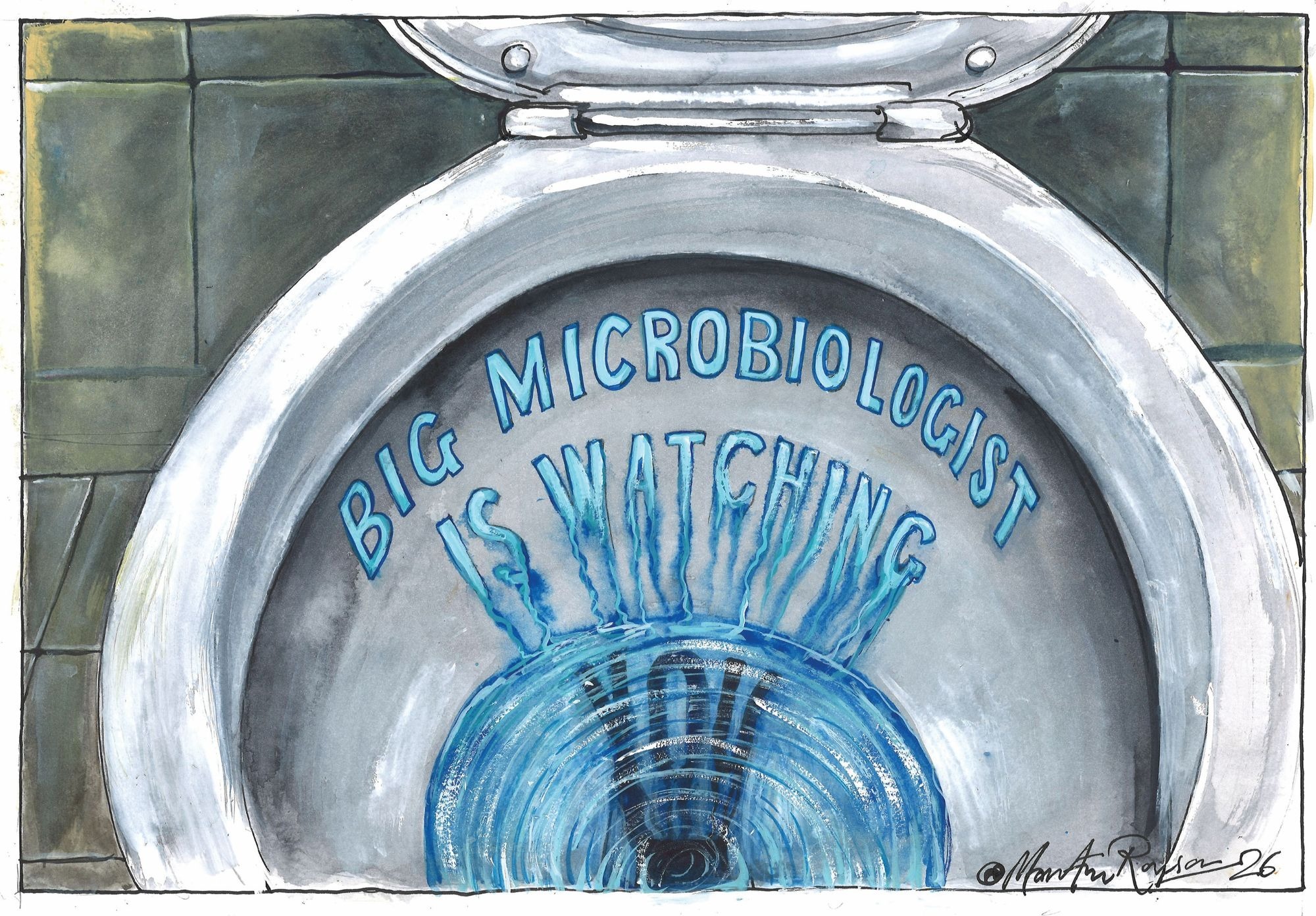
Many of the harms and benefits will not affect us, but future generations. If you’re a parent, you might already be thinking about what this means for your children. It could help keep them healthy, but they also could face Big Brother-style surveillance, where the state has genetic data on people – block by block, city by city – collected in hospital rooms, in wastewater, in prisons, care homes and detention centres. If that powerful data is used for people’s benefit, that’s great. But what if it’s used against them? This depends on whether proper guidance and regulations are put in place.
We are already seeing this tension play out. For a start, tissue or fluid samples are often taken from hospital patients, to confirm their diagnoses or see which drug they should take. But, if they have a notifiable disease, doctors are required to report it to public health authorities – even without the patient’s consent – in order to track disease spread. If the patient’s sample was added alongside other data like their testing location, date or demographic data, the person may then be re-identifiable as a link in a disease transmission chain. The same thing can happen in disease chains in care homes or prisons.
This might not be a problem, if the data was only used for disease prevention. But it can be used for other means, including in criminal courts. In Australia, a 47-year-old man was accused in 2008 of intentionally infecting two people with HIV between 2001-2003. Pathogen genomics wasn’t powerful enough to provide conclusive evidence in the original legal case, but it was later used in a study with more powerful methods to confirm that the defendant had infected the first two people, lining up with the legal decision, which resulted in the man being charged with grievous bodily harm.
On the one hand, I am horrified that someone who knew he had HIV for years would intentionally expose his sexual partners to the disease. On the other, this man went to a clinic to receive a diagnosis, and his sample was used not just to protect his health, but to investigate a crime. And what about other court cases, in other jurisdictions? What about the deterrent effect? In countries where homosexuality is criminalised, men who have sex with men are already fearful of seeking healthcare and testing for HIV. Lower levels of testing can mean higher transmission rates and more deaths.
We need to ask the broader questions. Do people living with HIV have a right for their data to be used only to promote their own health? Many of my colleagues would object to this: it’s the job of clinicians and healthcare systems not only to protect their own patients’ health, but to protect public health more broadly.
The real risk of discrimination
Pathogen genomics follows an already established trend by not requiring individual consent for public health (and even, occasionally, forensic) uses of clinical data. But that has to be balanced against the risk of the data being misused, for example to discriminate or prosecute on the basis of sexual orientation or behaviour.
The stigma of disease can take many forms. Those living in poorer conditions, with inadequate housing or lack of sanitation, are more prone to disease and its spread. Migrant communities may be more vulnerable, particularly those living in refugee camps. In 2015, the BBC reported on chaos on the Greek islands as overcrowded camps left children at risk of disease spread, abuse and heatstroke. In 2020, 140 ill refugee children were moved from the Lesbos refugee camp, with Médecins Sans Frontières accusing the Greek government of “deliberately depriving” the children of adequate medical care. A few months later, refugees and asylum seekers were being blamed by Greek politicians and the media for Covid-19 spreading to the general population. These populations already face systemic discrimination. Then they’re labelled as disease carriers, too.
In the future, our healthcare will look very different. Clinicians will increasingly be supported by AI and care will be highly personalised. So will future ethical issues. Our decision to give away our own data may feel like a personal choice, but it could have significant effects on other people. (How many of your relatives have sent away their DNA for ancestry testing without considering how this might impact you?) Still, if you live in a democracy, then misuse of health data only happens elsewhere, right?
Wrong. Democracies in the western world are gathering and using pathogen genomics data, and there are legitimate concerns that well-intentioned public health authorities might be required to share that data with other agencies – for example, for immigration and customs enforcement, or even to inform political campaigns. There are many incentives for governments to use this data, including the desire to be technologically competitive with other countries and the economic savings to be made by predicting costly events such as potential epidemics.
Biopower
In bioethics, we call this form of state control “biopower”. In the future, it may not matter whether people are willing to disclose information about their interactions, behaviours, locations or health status. The authorities could find out about them regardless. The pathogen genomics data, certainly, is already there: in the water, on the bus handles, in the air of hospitals.
This may seem rather futuristic, but it’s important to look where the slippery slope may lead, and how we can put up barriers along the way to guard against moral failure.
But we also need to consider the significant positive outcomes, in diseases prevented and lives saved. These positives are also likely to increase. So do they outweigh the risks?
Let’s return to Australia’s use of this cutting-edge science. It’s true that people’s waste was tested without their consent during the pandemic, resulting in quarantine for some. But public health action based on pathogen genomics information was estimated to have saved almost 1,000 lives, by alerting policymakers early to a second wave of Covid-19. It was used to develop an award-winning wastewater testing initiative, which functioned as an early-warning system.
Also, because the state could better target lockdowns to areas where Covid-19 was circulating more, restrictions were eased earlier in areas where they weren’t needed. On the one hand, targeting lockdowns impinges on some people’s right to freedom of movement and association. On the other hand, it protected rights relating to health and to freedom of movement and association for others.
The same goes for other forms of moral harm. The asylum seekers who arrive at our shores are often not given access to basic healthcare, and pathogen genomics may only exacerbate injustice for them. But what about other groups who, though marginalised, might benefit from the use of this data? In the US, pathogen genomics data on hepatitis viruses has shown up clusters and chains of people who have infected each other – often through injecting drugs and sharing needles. This cluster data has been used to target populations in need of needle exchange programmes and other support.
Preparing for the future
The final piece of the puzzle is to re-examine future uses of pathogen genomics. The WHO is calling for a global network for pathogen genomic surveillance to be established. This network will better inform our response to two major threats: another pandemic, and the rise of antibiotic resistance.
We have seen how the field could help in the next pandemic. It could also help to combat superbugs that emerge in people, animals and the environment and cause deaths from drug-resistant diseases. Pathogen genomics can tell us about what genes a pathogen has that might make it able to flush out certain kinds of drugs. With this knowledge, we can opt for different drugs that can properly treat the disease, and stop the pathogen from surviving and passing its resistance genes down the line.
On balance, it seems that these efforts, and positive results, could outweigh potential future harmful uses of pathogen genomics data.
I knocked on David’s door.
“And? What’s the bioethicist’s conclusion?” David wasn’t exactly holding his breath; he was confident in the moral merit of his research.
“I think it’s really important work. There are so many ways the data can protect our future health. But it can also harm us – it’s chaos out there, and there aren’t enough rules to prevent misuse. We need to do better. Will you help me?”
This is where bioethicists like me need to work with both scientists and members of the public. Firstly, we need to establish how much people care about the different harms and benefits. What is most important to people, and why? Once we’ve answered these questions and followed them up with ethically informed regulation, we can put this exciting new subfield of genomics to good use.
This article is from New Humanist’s Spring 2026 edition. Subscribe now.