A book by Matt Kaplan tells the stories of the scientists whose discoveries were overlooked
I Told You So! Scientists Who Were Ridiculed, Exiled, and Imprisoned for Being Right (St Martin’s Press) by Matt Kaplan
We like to think that science is guided by a noble ideal: evidence rules. When new data emerges, scientists revise their theories, abandon cherished ideas and move on. Except, of course, that this is largely nonsense. Science may aspire to objectivity, but it is practised by humans, people riddled with cognitive biases, egos, tribal instincts and professional anxieties.
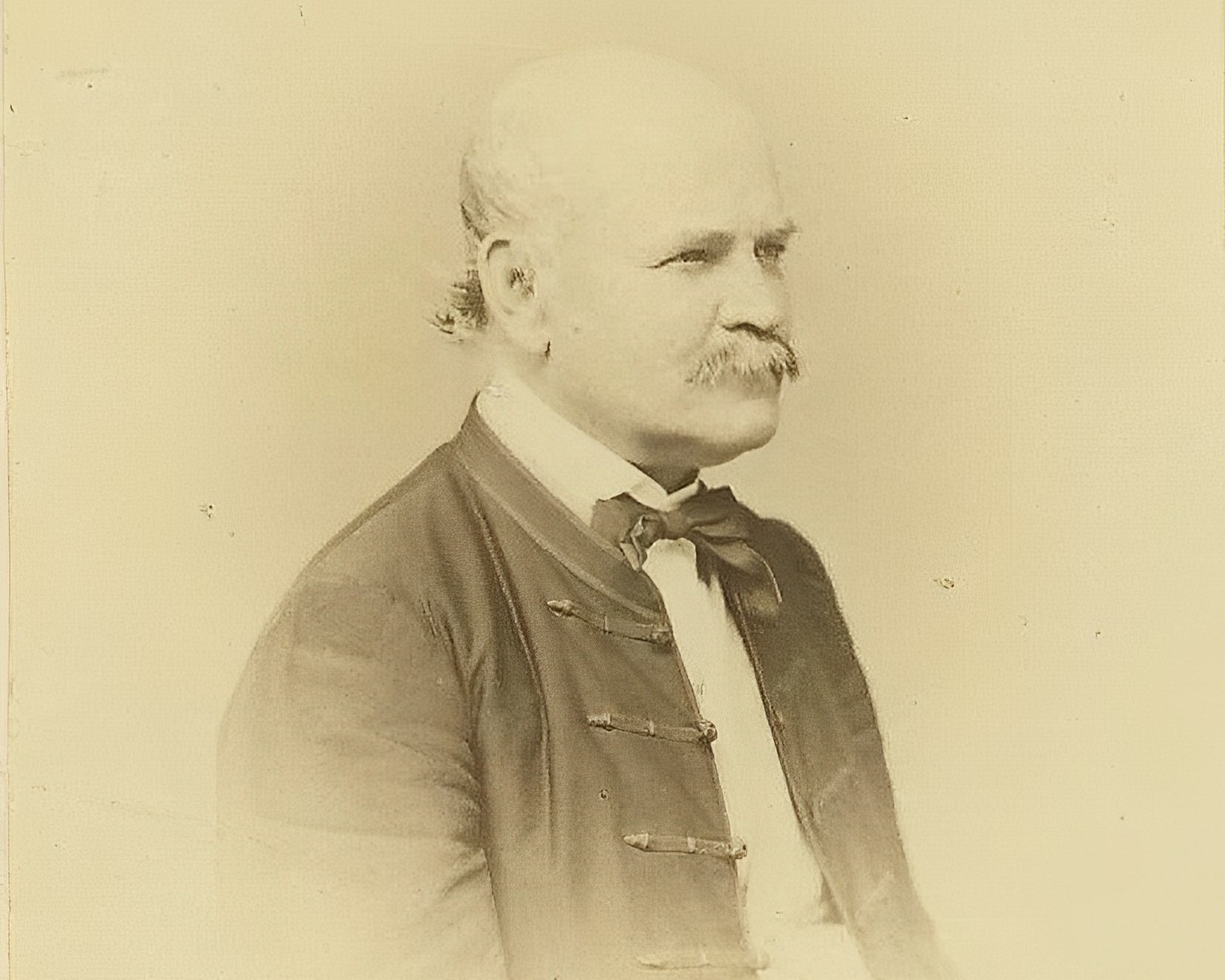
It is in this messy, human space that Matt Kaplan’s I Told You So firmly plants itself. At the heart of the book is the tragic and infuriating story of Ignaz Semmelweis, the 19th-century physician who demonstrated that simple hand hygiene by medical staff dramatically reduced deaths from puerperal fever, an infection that was killing vast numbers of women after childbirth. Kaplan tells this story with empathy and narrative drive, capturing Semmelweis as a dogged and deeply principled figure. Yet he also makes clear that Semmelweis was uncomfortable with self-promotion and slow to package his findings in ways that his peers could, or would, accept. This was not simply a failure of evidence, but a failure of communication and culture. By weaving in the work and personalities of contemporaries, he vividly recreates a scientific community on the brink of understanding infection, yet stubbornly resistant to ideas that challenged entrenched hierarchies.
Kaplan portrays Semmelweis’s approach in sharp contrast to Louis Pasteur’s, who worked in adjacent areas of microbiology and vaccination during the same period. Pasteur emerges as an undeniable scientific giant and a gifted communicator, but also as someone deeply unethical in how he presented his work and marginalised competitors. Kaplan details how Pasteur rewrote the narratives of his discoveries to make them more compelling, freely appropriated others’ ideas without proper credit and used his growing fame to erase rivals from the story.
While Semmelweis provides the book’s backbone, Kaplan deftly segues into modern parallels. Threads from palaeontology, drug development and animal welfare show that the dynamics of exclusion and dismissal are far from historical curiosities. Running alongside the Semmelweis narrative is the contemporary story of Katalin Karikó, whose work on mRNA was ignored, ridiculed and repeatedly defunded. The applications of her work were not immediately obvious, nor was it fashionable, and so Karikó was turned down for funding, pushed out of prestigious research environments, demoted and belittled. Yet her years of experience and results eventually led to her joining BioNTech in 2013, and to the subsequent development of the mRNA vaccines that saved millions of lives and helped bring the Covid-19 pandemic under control.
Kaplan uses these stories to build a compelling and uncomfortable argument: science does not always advance by rewarding the best ideas, but too often by amplifying the loudest voices. As he writes, “science is rich with tales of those who were right but who had an exceptionally challenging explanation that they needed to communicate.” The lesson is not that all outsiders are correct, nor that consensus is inherently bad, but that healthy science requires humility, curiosity and better listening.
This is where Kaplan’s excellent book quietly becomes a manifesto for science communication. If scientific progress is to be driven by the best ideas rather than the sharpest elbows, then scientists and communicators alike have a responsibility to seek out those doing careful, unfashionable or poorly advertised work and help them be heard. Not everyone can, or should, communicate like Pasteur. Yet the fact that his version of events persists to this day, even when contradicted by his own laboratory notebooks, is perhaps the clearest demonstration of the enduring power of good storytelling in science.
This article is from New Humanist’s Spring 2026 edition. Subscribe now.