
Dorothy Tse's latest novella contains careful clues to real events in Hong Kong’s recent past
City Like Water (Fitzcarraldo Editions) by Dorothy Tse, translated by Natascha Bruce
The handover of Hong Kong in July 1997 transferred control of the region to the People’s Republic of China after more than 150 years of British rule. As many feared, freedoms of expression, press and assembly were sharply curtailed. Then, in 2014, the Standing Committee of China’s National People’s Congress ruled that Hong Kongers could only vote for a Chief Executive from a list of candidates pre-screened by Beijing. Many citizens considered this a rejection of meaningful democratic reform and a betrayal of the assurances given under the principle of “one country, two systems”.
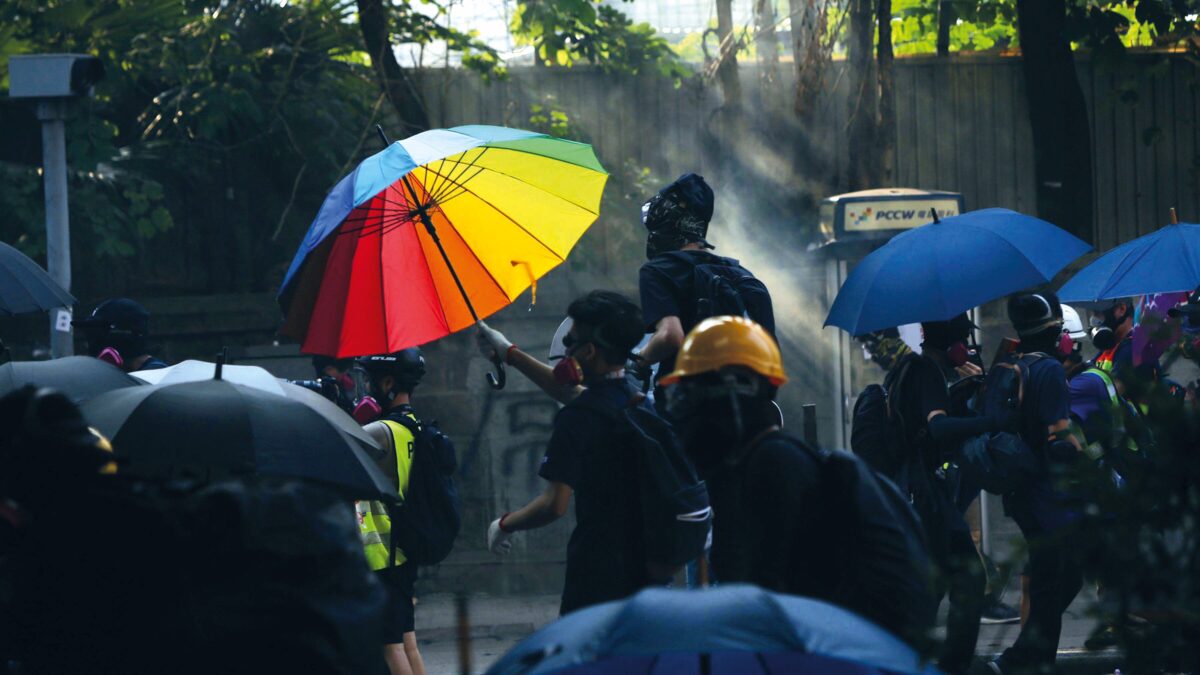
As Beijing intensified its political interference over the years, tensions escalated, culminating in the Umbrella movement – a pro-democracy civil disobedience campaign, during which tens of thousands of people demanded universal suffrage by occupying major roads between 26 September and 15 December 2014. Police use of tear gas triggered further outrage, and umbrellas – used as shields against pepper spray and tear gas – became symbolic of the movement. In 2019, the proposed Extradition Bill, which would have allowed criminal suspects to be sent to mainland China, provoked another wave of demonstrations that were also violently supressed.
Dorothy Tse, known for her surrealist and experimental fiction, is widely regarded as one of Hong Kong’s most original contemporary writers. An associate professor of creative writing at Hong Kong Baptist University, she is also co-founder of the literary magazine Fleurs des Lettres. Her debut novel Owlish, translated by Natascha Bruce in 2023, was a powerful portrait of government repression.
Tse explores similar themes in City Like Water (also translated by Bruce), the first and longest piece in her 2020 short story collection The Ghost with No Umbrella, which has now been published by Fitzcarraldo Editions as a standalone novella. The narrative unfolds in short chapters, with Tse dropping in clues to real events in Hong Kong’s recent past, though the references are often oblique and the setting is unnamed. Such caution reflects the authorities’ increasingly hardline stance towards critical voices. In a 2015 interview with PEN, Tse observed: “Every word becomes dangerous when words fall into a wave of social movements.” She clearly sensed more was to come.
In 2020, Beijing imposed the National Security Law, aimed at criminalising dissent and tightening political control. Emblematic of this clampdown is the recent prosecution of the 78-year-old media owner Jimmy Lai, who in February 2026 was found guilty on two charges of conspiring to collude with foreign forces and sentenced to 20 years in prison under the new law. Amnesty said Lai’s sentence “marks another grim milestone in Hong Kong’s transformation from a city governed by the rule of law to one ruled by fear”.
City Like Water opens with the male narrator in a fictional boat. He has lost his little sister; later he imagines seeing her “outside the window, holding an umbrella, floating in mid-air”. She leads him towards a bookshop called Desert, where birds transform into books. He roams the streets, fearful of being detained: “I’d heard there was a crime called loitering. How far would I have to wander aimlessly, and for how long, to commit it?” When his mother is sold fake lotus roots, she joins a women’s protest movement. They are showered with glittering powder from a helicopter, coating and transforming them into “shimmering bronze statues” before the police open fire.
The women disappear and the TV news reports that they were counter-revolutionaries, “members of a criminal gang that disguised themselves as housewives”. At 10 o’clock each evening, the narrator hears heart-rending shouts – a nod to the nightly calls from windows during the 2019 protests.
Tse blurs political and social realities with surreal imagery. The city becomes a police state where “All we had to do was sit mournfully on the street, singing elegies to our lost mothers, and bullets would come at us from all sides. The smoking rounds release a stink that made our eyes weep as much as our skin … Even school kids were equipped, their book bags crammed with swimming goggles, water to counteract tear gas, cling film to protect arms from toxic spray.” The police stop wearing uniforms, infiltrating the population until “we were perpetually on edge, waiting for them to flip and reveal themselves, like terrifying poker cards”. Mentions of lotus root can no longer be found online; “the term had vanished into an internet black hole”.
Although referencing past events, City Like Water feels eerily prescient. Tse offers a chilling vision of authoritarianism, where lived experience is transformed into the nightmarish landscape of her fiction.