The latest from Michael Rosen's column on language and its uses
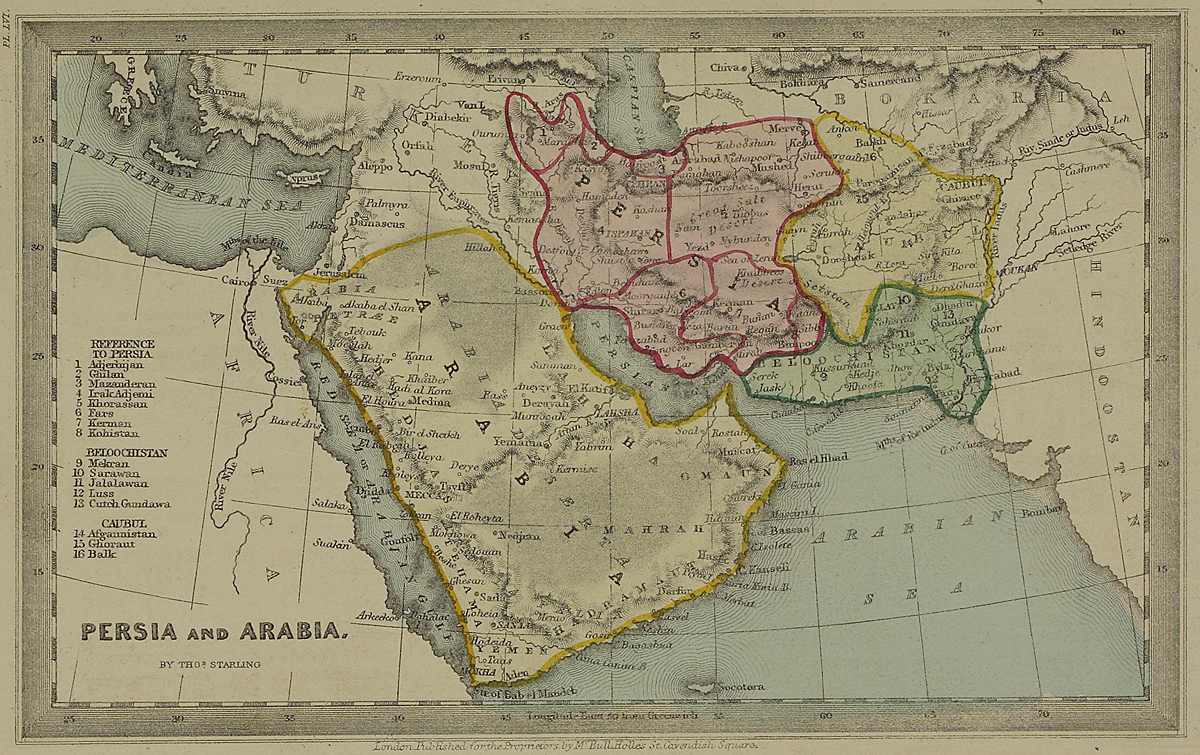
Middle East, 1876: An extensive area of south-west Asia and northern Africa
No matter how absurd it is to talk of a place called the “Middle East”, we persist in doing so. Given that the world is a sphere, nowhere is objectively east (or west) of anywhere else. The first people who used the term aren’t even particularly precise as to which countries belong to this area. The best that some dictionaries come up with is “an area perceived as lying between the Near East and the Far East”. We might ask, perceived by whom?
The term is usually used to describe the geographical area from the eastern Mediterranean to Iran, including Syria, Jordan, Israel, Lebanon, Saudi Arabia, Iran and Iraq. For some, the Middle East includes Egypt and north Africa, and in its earliest uses as a phrase it also included “India and adjacent countries”, says the Oxford English Dictionary.
The earliest example that the OED gives is 1876, in a journal called Zion’s Herald, which was the first weekly Methodist publication in the United States, and which talked of “those nations of the middle East, formerly so little known to us”, without even a nod towards the fact that such places were of course known to the people living there.
Linguistically, the words that make up the phrase are both Germanic: “middle” used to be middel in Old English, while “east” has even older connections to words for the dawn.
By 1897, the Catholic World talked of the “middle East” in the same breath as “mystic Egypt”, which supports the historian and critic Edward Said’s “Orientalism”, a concept he created to describe how the western world exoticised the “east”. By 1900, in a reference in the journal The Nineteenth Century, the “middle” in the phrase had acquired a capital letter, and was now part of “our [British] policy” with talk of how “we” could or should ensure the “preservation of the independence” of territory thousands of miles from Britain. This approach, eagerly adopted by the US, has carried on ever since.