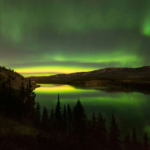
Want to become a space weather monitor?
If you have a smartphone, you can now help track the solar storms that cause major disruptions to electronics and satellites.

If you have a smartphone, you can now help track the solar storms that cause major disruptions to electronics and satellites.
Secret services have long used scientists to help develop their strategic capability. But with new threats looming, can alternative fields of expertise further aid their efforts?

What prospects does the future hold for treating Alzheimer’s disease, now that doubt has been cast on the approval of Aducanumab?

Human civilisation has degraded the earth beneath our feet. But working on an urban garden gave Kate Brown hope.

The art of "reading faces" is unscientific, so why do we use facial expressions to ascertain truth in court?
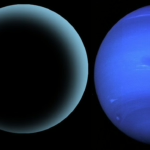
Is the search for a phantom planet on the outskirts of the Solar System nothing more than a wild goose chase?

Hundreds of fact-checking organisations have mushroomed over the last decade. Can they succeed in holding back the tide of disinformation?
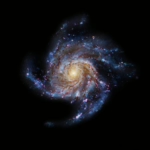
The magnetic fields within galaxy clusters are key to to the story of the Universe. New research sheds lights on the process behind their growth.
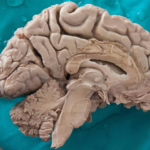
A team at Cambridge has grown 3D “mini brains” from chimp, gorilla and human cells to discover the biological basis of our big brains.
New research into chemosignals is looking into how these scents, produced naturally by our bodies, could be harnessed to influence mood.