The show created a magical space where my daughter and I could meet
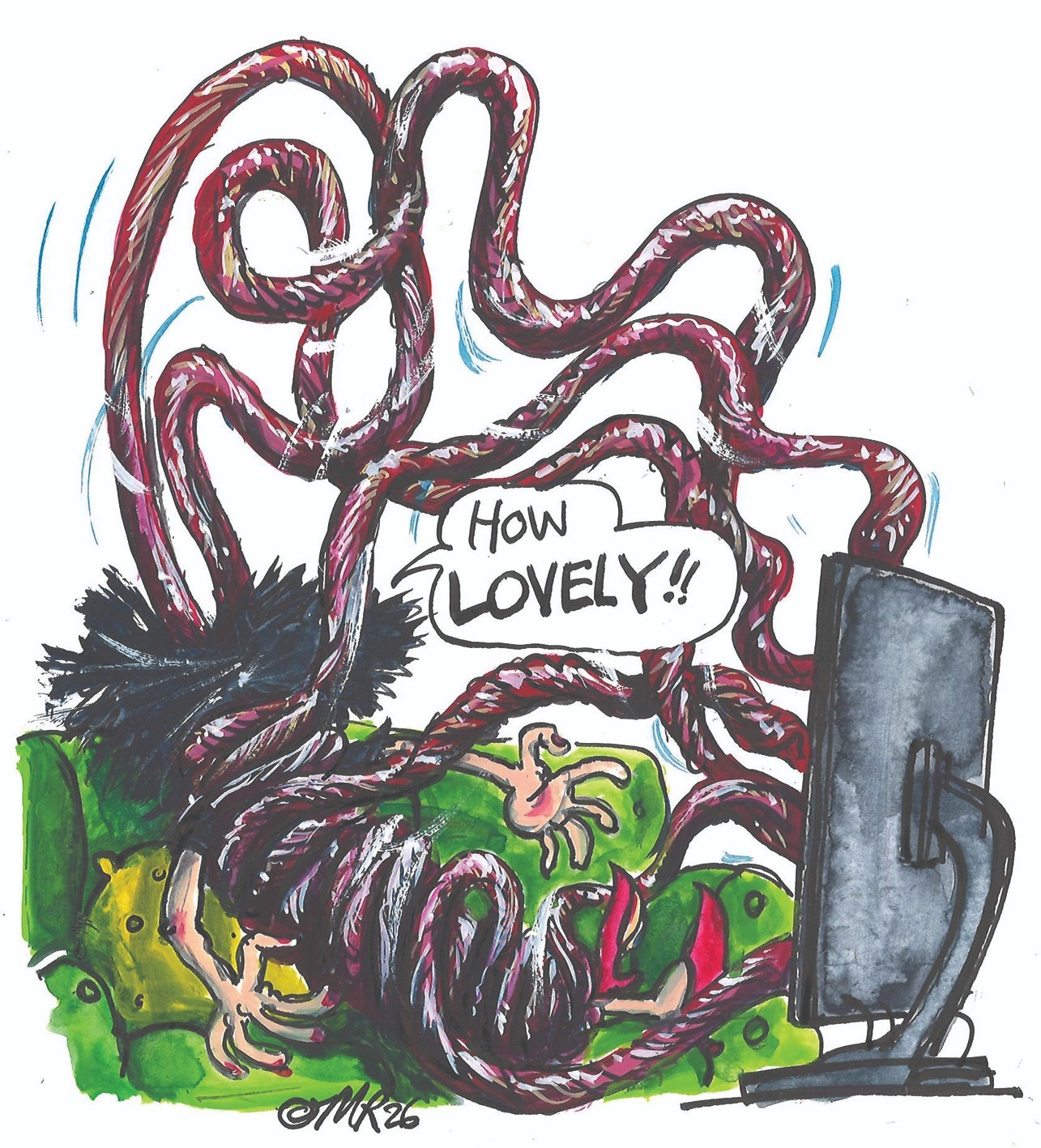
My new year began not with resolutions, but with tentacled monsters menacing 1980s children and their trusted adults. At the crack of dawn, I was on the sofa with my 12-year-old daughter, gripped by the Stranger Things series finale.
Watching TV with my children is one of life’s great joys – and at 12, my daughter is at the in-between age when the pool of shows we both love watching isn’t all that vast yet. Stranger Things bridges the gap between us so perfectly that for a couple hours she forgot I was her desperately uncool mother. I was a fellow adventurer flying with her through the Upside Down, entirely absorbed in the fate of the characters we have watched grow up and grown to love.
This used to be the simplest pleasure: watching TV with your family. One set, one channel and everyone in the same room. The chances of a shared experience diminished once we could watch our favourite shows on a train or during a challenging bowel movement. And this speaks to the great paradox of being a Generation X parent. We are forever explaining to our children that we were exactly like them once, while also insisting that our childhoods were completely different.
We had no internet, no phones, no streaming platforms – yet we were the modern generation. We had E.T. and Star Wars. We skateboarded without helmets and drank drinks that glowed in the dark. We were supposed to remain eternally youthful, preserved in the amber of grunge and VHS. So the creeping suspicion that our children might see us as old is frankly unbearable.
This is why Stranger Things has been such a joy and relief. Set in the 1980s, it should by rights be pure nostalgia syrup: bikes, basements, synths, curly hair that crunches. Yet somehow it surpasses that. The kids in the midwestern town of Hawkins don’t feel like retro relics. They feel startlingly like Gen Z: clever, funny, emotionally alert, but with more face-to-face bullying than online.
Then there’s the particular joy of Winona Ryder in the series. In the 90s, she was my complicated dream girl, the patron saint of dramatic eyeliner. I so wanted to be like her. Now she’s playing a frazzled single mum – just like me (sort of). Watching her character develop, as her anxiety strengthens into iron-willed protectiveness, has been unexpectedly moving. The show is a meeting point of generations, where Winona is still cooler than all of us combined.
That said, sometimes there are little jolts. Like when Will came out as gay, and my daughter informed me that “there was way more homophobia in the 80s, so Will is really brave and really felt he was risking losing his friends”. She said this, very earnestly, as though I wasn’t from that decade myself, when Section 28 set hatred into law. She speaks as though the 80s weren’t a real period of time, but more like a historical reenactment village.
But there’s something beautiful about that too. My daughter feels ownership over the 80s of Stranger Things – not as my past, but as her story-world. She meets me there, half in history, half in fiction. And for a moment, the generational performance drops away. I’m just a person who was once a child, watching children navigate the strangeness of growing up, next to my own actual child doing the same.
The finale of the show left me aching for my own childhood, where there were endless, wide-open skies of possibility. The writers, Matt and Ross Duffer, in their creation of a world that is part Star Wars, part Godzilla and part Eastenders, gave a glorious piece of my childhood back to me for a moment. As Bowie’s “Heroes” rang out in the final credits, I sobbed and said to my daughter, “See darling? The wonder, the magic never leaves us! It just changes shape and we forget to look for it, but it’s there, darling, the wonder is always there.”
She raised her eyebrows and got up, muttering, “Oh my god, Mummy, it’s just a show”.
This article is a preview from New Humanist’s Spring 2026 issue. Subscribe now.