Nick Lowles of Hope Not Hate says we need our political leaders to defend Britain’s multicultural society
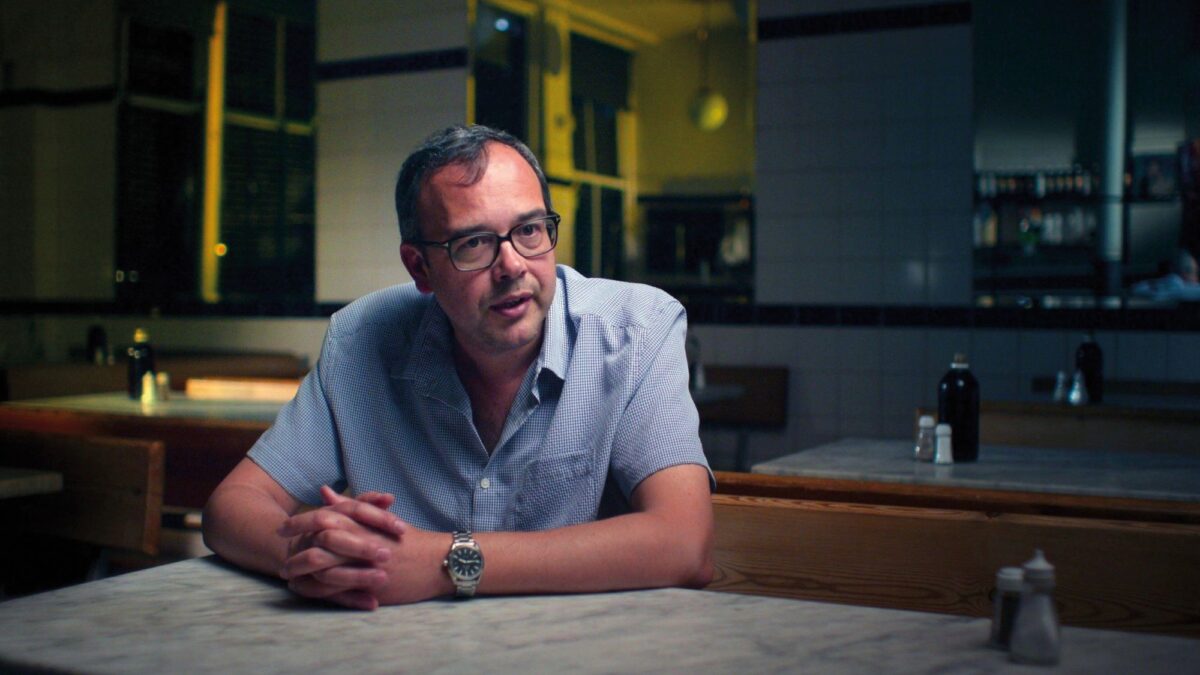
Nick Lowles is the founder and chief executive of anti-racism group Hope Not Hate.
What do you make of the rise of the Christian right in Britain?
What we’ve seen over the last 10 or 15 years, but which has really taken hold in the last couple of years, is a trend where the far right and the populist right are framing their political narrative around an existential threat to the British way of life, or the “Judeo-Christian West” – a nostalgic throwback to some golden era that didn’t happen.
Some of this is about framing and tapping into this mood of decline, this idea that Britain is going downhill, and a nostalgic view of the golden days – you know, Empire, Queen, Country, God. It’s also a reflection of US politics coming into Europe and the UK, and right-wing Christian money coming in as well.
There are lots of different strains, aren’t there?
Yes, you have the Tommy Robinson version of Christian nationalism, which is an appropriation of religion for political reasons. He doesn’t care about religion, and as we saw with the fairly pitiful turnout for his Christmas carol concert, most of his supporters don’t either.
To me, what’s much more serious is the rise of post-liberalism in Catholic and other branches of Christian theology. That includes people like the Cambridge theologian James Orr, who is now Reform UK’s Head of Policy, media mogul Paul Marshall, who co-owns GB News, JD Vance, and the tech entrepreneur Peter Thiel, who is part of a slightly different wing. They seem more respected, and less politically toxic, but actually they are driven by a much more defined and devout political view. There’s serious money behind them and they have influence.
There’s an attitude of “it can’t happen here”, because Britain is a secular, moderate country. Are we in danger of complacency?
Definitely. There are things that I never expected to be back on the political agenda, things I thought had been debated and won 30 or 40 years ago, like “Can Britain be a multicultural society?” I remember in 1999 when Nick Griffin was leader of the British National Party, they dropped their compulsory repatriation policy because they couldn’t even sell it to their own supporters any more. Now you’re getting debates in mainstream media around whether black people can be British. Even Rishi Sunak had to defend himself this year [following comments by podcaster Konstantin Kisin that the former prime minister could not be English as he was a “brown-skinned Hindu”].
Take the civil war narrative, which came out of organised anti-Muslim networks, particularly after 9/11, saying that Islam is a supremacist religion, so there’s going to be conflict with Christian society. Those were fringe people. Now everyone on the right is talking about it, and more than 60 per cent of Reform UK members think a civil war will happen.
How has the right-wing ecosystem changed, as Reform UK has gained mainstream support?
In the aftermath of the 2024 general election, Nigel Farage realised that for Reform UK to get to the 30-35 per cent needed to win a general election, they had to moderate some of their views. Whether on immigration, or on Islam, he made quite moderate interventions. But the rise of the Tommy Robinson movement and Restore Britain is pushing Reform to the right. And unfortunately, I think a combination of fear and lack of confidence from the political parties, particularly Labour, means that they’re not getting challenged.
In March, Restore Britain went from being a movement to a political party. Led by Rupert Lowe, the MP for Great Yarmouth, formerly a Reform MP, it is basically a racial nationalist party. It believes in mass deportations. It believes that only white people can be British. It’s a lot more extreme than Reform UK, and it takes great delight in that fact. And what’s scary is that opinion polls are giving it between 6 and 7 per cent. You’ve got Elon Musk supporting it. You’ve got a lot of younger YouTubers supporting it. It’s a much younger audience than Reform, much more of an activist base.
How do we resist? The Together Alliance rally in March was the biggest anti-right demonstration in British history. Did it give you hope?
I think it was useful in terms of making people feel positive and hopefully energised and getting involved in things. But it’s not an alternative to getting out into the communities and having the debates, winning the arguments, explaining things to people. And I know the organisers were conscious of this, but there is a tendency on these demos where you shout your antifascist slogans, “everyone’s a Nazi”. But the reality is that people are being attracted to the right for a whole variety of different reasons, and we need to engage with people where they are.
For my book that came out last year, How to Defeat the Far Right: Lessons From Hope Not Hate, we analysed opinions on immigration and found a direct correlation in communities between the most intense hostility to immigration, and levels of multiple deprivation. And it wasn’t just economic deprivation, it was the decline in social capital, the glue that held communities together. So part of my argument to Labour and to all politicians is that you’re not going to change this by just changing immigration policy. Underlying all of this is economic pessimism.
How do we engage with people where they are?
We, meaning progressive forces, need to create our own media. You’ve got billionaires on the right buying up newspapers, but also the far right are much better at using and utilising new forms of media than we are. We need to get better at that. Some of it comes down to money, but a lot of it’s about ingenuity and innovative ideas.
Hope Not Hate is starting to produce community newspapers, with an initial batch of around 30. They’re positive, they’re local, trying to address what are sometimes difficult issues – whether it’s around immigration, crime, asylum seekers – in more human and positive ways. The aim is to carry on with these papers, and eventually start doing local campaigns out of it. That’s just a small example. But we’ve got to get back to basics. If we help people on local issues, they’re more likely to trust us and listen to us on bigger national or international issues.
Right now [late April] we’re planning a week of events called a Million Acts of Hope, with thousands of events across the country, to be held in May. So far, 180 national organisations have signed up, and dozens and dozens of local ones, from the Women’s Institute to the Samaritans, Oxfam, Shelter, right across the board. It’s about celebrating the good that’s in communities and saying, “look, there are problems in society, but actually at a local level, most people get along, most people get on with things. And we’ve all got to step up, we’ve all got a role to play.”
Any final thoughts on how to fight extremism?
There’s a symbiotic relationship between extremisms. And there’s a danger that the rise of Christian nationalism is playing into a narrative of hardline Islamists that says, “Western society will never accept you.” And then that plays into the Christian side.
We don’t want to go down that path. We really do need our political leaders to stand up and be brave and defend Britain’s diverse, multicultural society where there is space for people of all religions, and no religions as well. We need some boldness, and we haven’t had that. Sensible people, moderate people, have to step up, because if we cede the ground to these extremists, Britain will be moving into quite a dangerous place.