Maggie Gyllenhaal's "The Bride!" has been lauded as a feminist triumph. That's not what it looked like to me
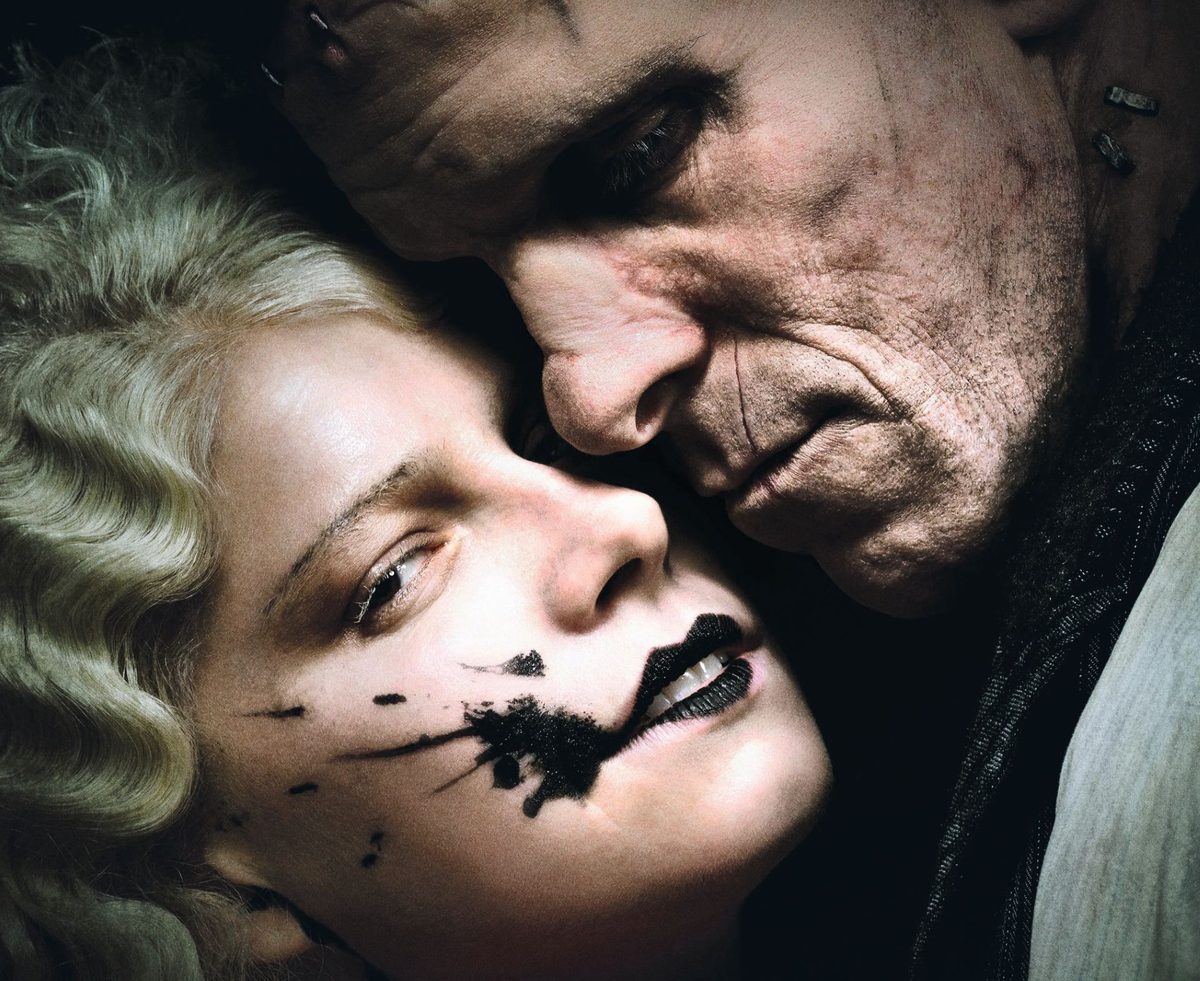
Review:The Bride!
Written and directed by Maggie Gyllenhaal
Loving relationships can only flourish when they are freely chosen. And that is why abuse and exploitation are not simply detrimental to the person who endures them but also to the person who inflicts them. To insist that love can be achieved through power and coercion is to contravene the essence of our humanity.
And yet, Maggie Gyllenhaal’s latest film, The Bride!, does exactly this; it subverts a human notion of freedom, repackaging rape as love. There is a murdered woman (played by Jessie Buckley) who is reanimated, but in being brought back to life she loses her memory. The man who helps bring her back to life (played by Christian Bale) convinces her that they were married previously, and that she has lost her memory by accident. The man in question is “Frank”, the centuries-old creation of Dr Victor Frankenstein, who has been left to wander the world in haunting isolation.
When he steals the past of his victim – for that is what the Bride is – we are meant to feel that a noble, wounded creature’s loneliness and pain is finally at an end, for she can see him as he truly is: the beautiful soul underneath the twisted, grotesque body. In fact, what is projected here is absolute entitlement. In our own reality, the Bride’s “Frank” might well have spent hours on the internet, immersing himself in the grievances of the manosphere as a better way to balm his pain.
But it isn’t just the premise of this film which proves obscene. The plot itself is another insidious illusion, whereby the smoke-and-mirrors effect of the gothic, steampunk, “radical”, dystopic presentation works to disguise the retrograde political core. Once her rapist has successfully manipulated her, the Bride (Ida) and the creature (Frank) set off on a crime spree in the style of a feminist-cum-Bonnie and Clyde outcast adventure.
Gyllenhaal has clearly created the film with what she believed to be a feminist slant. This comes from the fact that Ida is rebelling against her own oppression; prior to her death it is revealed that she was a member of a crime syndicate whose boss, Lupino, exploited her. But the nature of Ida’s mistreatment is never revealed. And so, her gender rebellion doesn’t derive from a living personality, grown out of a particular set of social and political circumstances. Instead, she is possessed by the spirit of the writer of Frankenstein, Mary Shelley. This spirit simply takes Ida over and thus transitions her into the figure of the Bride.
The film is clearly an attempt to trap and bottle the zeitgeist, to provide us with a 21st-century insouciant punk feminist icon. But Ida is an empty husk, possessed and driven toward her fate – first by the ghost of Shelley and then by her rapist and partner in crime, Frank. The ghost is itself a corruption. Anyone who has read the original Frankenstein can’t fail to be struck by the sensitivity of the novel, remarkable given its author was only eighteen when she began to write it. From any number of biographies, you receive the impression of Shelley as an owlish young woman, incredibly curious and well-read, and yet introverted, someone of deep political conviction and inner life.
But the Shelley that Gyllenhaal presents us with is a disembodied voice, projected from beyond the grave – a demonic ranting presence who is entirely full of rage and yet entirely without ideas. As a purely primitive and primal spirit, this is nothing other than the cliché of the hysterical woman. When the Ida character started chanting “me too, me too”, that was the moment when I walked out of the film. I really can’t remember the last time I have left a cinema mid-showing.
Sadly, inevitably, The Bride! has received some very positive reviews. At the head of the pack is the Guardian’s film critic Peter Bradshaw, lauding the troubling central relationship as a “bizarre and enjoyable spectacle of married bliss”, while The Arts Desk described it as a “punkish, gothic, genre dancing, feminist riot”. In a similar vein, pop culture website AV Club called it “a bold, bloody, feminist Frankenstein freakout”.
At the end of the film, which I watched later, we are treated to a scene of female rioters, with the implication that the Bride’s activities have sparked a larger feminist movement. And yet, Gyllenhaal has managed to achieve perhaps one of the purest, most abject exercises in female objectification ever put to screen.